
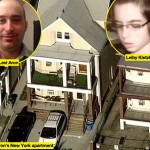
Forensics Dispatch From New York City: Searching A House Of Horrors
A warm All Things Crime Blog welcome to John Paolucci, former NYPD Crime Scene Unit Supervisor and Commander of the OCME Liaison Unit. In this post, John describes the Forensics Investigation in the infamous Leiby Kletsky child sex/murder case. We are honored to have John as one of our contributors.
 The investigation into the Cleveland kidnappings is in many ways just beginning. It brings to mind the case of a murdered 8 year old Hasidic boy by the name of Leiby Kletzky, who was dismembered, packed into a suitcase and discarded in a dumpster by the perpetrator Levi Aron, who performed the dissection of the child in his Brooklyn apartment. Aron kept a souvenir of the incident, the boy’s feet, which he stowed in a freezer in the apartment. In the Cleveland kidnappings, like in the Kletzky case, there appears to be a wealth of incriminating evidence against the perpetrators. In cases like these, the investigators need to have the scenes speak to them, hopefully answering the question, “Are there more victims?”
 What we did not have in the Kletzky case was a living victim who could provide investigators with patterns of the perpetrator’s behavior and habits. Kletsky’s Brooklyn community has its own “Shamrim” patrols, and they generally do not call the police unless it is absolutely necessary. Therefore, although we were able to learn that Levi Aron had twice been banished from the community, there was no paper trail to follow as to what activities caused this expulsion. It was rumored that he had behaved inappropriately towards children, but no one would come forward and provide more specific details. Individuals like Castro and Aron exhibit behavior so abhorrent and predatory that investigators will adopt the theory that there are other victims besides those that are already known, and believe that the crime scenes will likely hold clues as to their identity if they exist.
Levi Aron was identified as the person who abducted Kletzky while the investigation was still being carried as a “Missing Persons” case, so in both the Kletzky and the Cleveland cases there was a presumption that there are living victims in the locations who are in danger, thereby giving first responders an exigent circumstance exception to the fourth amendment, allowing them lawful entry into the residences for the purpose of preserving life. Once it is determined that no civilians’ personal safety is in danger, the residence must be secured until a search warrant is issued so as not to risk the suppression of any evidence at the subsequent legal proceedings.
So the Question Is: What Are the Investigators Looking For?
 The Search: Aron was a hoarder, so the apartment had to be documented in stages, as layers of Aron’s accumulated possessions were moved and removed, to allow overall and detailed photographs, sketches and measurements to be taken. The primary scene (apparent location of the murder) was the third floor wherein there was no air conditioning to provide relief from the humid, New York July heat. Since it was confirmed that Aron kept a trophy from his victim in the form of body parts, we needed to be certain that nothing as small as a nail clipping was overlooked while searching the stinking mound amassed throughout the years of a child murderer’s life. Items in jeopardy of perishing in that harsh climate, such as blood evidence, were given immediate attention to ensure their preservation for laboratory testing. The items of evidence were methodically collected, packaged, documented and made ready for transport. A police box truck transported evidence to a central location where it was logged in, bar coded and vetted according to the information that was available as the investigation progressed. Aside from the residence, there was also 1) the dumpster in which the suitcase was recovered which was removed to our forensic garage and processed for fingerprints and DNA, 2) Aron’s vehicle which he used to abduct Kletzky, and 3) Aron’s locker and work space at his job, where he showed up to work in the interim between abducting Kletzky and killing him. It was unclear how Aron was able to leave a live 8 year old in an apartment, go to work and return to kill the child without any other residents hearing anything.
The Evidence: As commanding officer of the unit in the NYPD’s Forensic Investigations Division responsible for managing all DNA evidence collected in New York City, I had over 1,400 items of evidence seized from the Aron residence. The evidence was categorized and assigned to the appropriate unit for respective analyses. I would expect a similar strategy to be deployed in Cleveland. At a meeting prior to commencing the search of the Aron residence, the Chief of Detectives told the Crime Scene Unit, “I want that place down to f**kin’ 2x4s when we leave!” So it began. The following are some of the categories of evidence and the types of analyses requested and possible results that were anticipated (certain details and results are being withheld to preserve the integrity of the case):
 DNA Evidence: Leiby Kletzky’s DNA profile was compared to blood evidence recovered from the apartment. Blood saturated rugs and mattresses recovered at the scene, and specific areas on these items were sampled, analyzed and compared to Kletzky’s DNA, and DNA collected from Levi Aron, to determine if any of the profiles developed were foreign and possibly that of another victim. All blood evidence matched Kletzky’s DNA profile. Items such as stuffed animals and women’s clothing were scraped and swabbed to collect skin cells that revealed DNA profiles foreign to the victim and perpetrator, some of which were female. Through investigative leads, it was revealed that Aron had a brief marriage to a woman in Tennessee, who when contacted identified the clothing as hers, and provided DNA exemplars from herself and her child. When these exemplars were analyzed they matched the foreign profiles. Therefore, the DNA avenue of this investigation yielded no leads as to additional victims. Though this was good news, it was not satisfying to any of us because we believed that no killer performs a precise dissection of his victim on his first “at bat”. The search continued.
Digital Multi Media (DMM): All laptop and desktop computers and accessories, all CDs and DVDs, thumb drives, cell phones, cameras, video equipment and anything that stores electronic data, which Aron had plenty of, was seized. A task force of computer crimes Detectives was assigned the duty of decrypting, downloading, reviewing and analyzing all data from these items. Communications via telephone and email helped to establish a timeline of his travels and document persons with whom he associated and locations where he spent time while banned from returning to Brooklyn. We sent Detectives to Louisiana, Arkansas and Tennessee tracking down his acquaintances and searching local records for missing children. Several of Aron’s associates had police records involving minor sexual related offenses, arousing further suspicions that Aron had committed other offenses. The digital evidence was also searched for photos of children or child pornography. Time and again, all leads were exploited, but no fruit was harvested.
 Controlled Substance Evidence: Evidence collected from the apartment in the form of prescription bottles containing pills proved to have significant value in the investigation. The NYPD Crime Laboratory Controlled Substance Analysis Section documented each prescription and tested the pills to determine if the contents matched the label, many of which were labeled “Controlled Substance”. Results were forwarded to the Office of Chief Medical Examiner (OCME) Department of Toxicology, where post mortem samples, collected at autopsy from Kletzky, were analyzed for the presence of these controlled substances. The horror of Levi Aron’s deed was amplified when it was revealed through the toxicology examination that he had combined several of these controlled substances and made Kletzky ingest this noxious cocktail, rendering him unconscious, which would explain how the child remained silent while Aron went to work that day. The controlled substance analyses were vital in corroborating the series of events we believed had transpired just prior to the child’s murder. It also explained how some of the incisions performed on this tortured child were made ante mortem.
 In Cleveland, nothing will be “out of play” when searching the Castro house. The victims have already provided DNA exemplars and may have to provide things such as hair samples and undergo other very personal examinations to assist with the investigation. Remains as small as a miscarried fetus that was essentially beaten out of the mother could be hidden anywhere in the house if not discarded with the trash. There is hardly an area or an item in that house that can immediately be ruled out as not probative. Searches, swabs, photos, sketches, presumptive tests, DNA analysis and comparisons to the victims and Castro, floor boards to be pulled up, walls to be opened – there shouldn’t be anything but f**kin’ 2x4s left when they are done searching! My heart goes out to the victims, their families and the investigators in Cleveland.
About the Author: John Paolucci is a retired Detective Sergeant from NYPD who worked his last eight years in the Forensic Investigations Division, four of them as a Crime Scene Unit supervisor. He was the first ever to command the OCME Liaison Unit where he managed all DNA evidence in NYC and trained thousands of investigators in DNA evidence collection and documentation. He developed a strong alliance between the OCME Forensic Biology Department and NYPD. He also worked as a Narcotics Undercover and Patrol Officer in the Housing Projects of the South Bronx. He is currently the president of Forensics 4 Real Inc., where he provides forensic support to private investigations, international and domestic. He also trains students and law enforcement in forensic evidence and crime scene investigations and provides consultations with movie and television writers, directors and developers working on real crime shows and dramas. www.forensics4real.com.
If you enjoyed this article, please consider sharing it!



Great post. Thanks for sharing your insider’s perspective on the type of investigation going on in Cleveland right now. Very detailed, informative, and fascinating. Much respect to the investigators who carry out this highly skilled, meticulous (and unpleasant) work so that in the end justice can be served in the wake of such tragedy. Down to the 2x4s, indeed…
Thank you Nashe. I appreciate your understanding. Let’s watch as this unfolds, hopefully bring the victims peace and justice.
John does a great job providing us with a gripping snapshot into what Investigators have to deal with and think about when at work every day. While the severity of the crimes and crime scenes vary, the idea that all angles have to be considered both as concepts and as actual labor, actually donning the latex gloves to ‘tag and bag’, is a very real part of the job. Neither TV nor the movies can ever do this topic justice. John can.
I really appreciate your words Alan. So that “SVU” show doesn’t accurately depict what you’ve done in the Manhattan Special Victim’s Squad (SVS) all these years? I know the only times I couldn’t stop myself from getting personally caught up in a case was when it had to do with the murder and/or rape of a child, and also that Columbia coed who was raped, tortured, eyes slashed and set on fire and survived (Manhattan SVS case). Regardless, calm and objectivity must prevail in order to find the truth.
John, It’s illuminating to consider the emotional intensity which a Forensic Investigator must try to keep at bay to maintain objectivity, and how hard it must be in the truly wrenching cases. It might be interesting to write a post on the difference between SVU as it’s depicted on television and what it’s really like.
The cases that beg to involve you emotionally are difficult for the Crime Scene personnel, but Detectives like Alan are tasked with some of the MOST difficult assignments like making notifications to the family. On the occasions where I was at a crime scene and a family member showed up, it was one of the most difficult experiences that I can recall.
Yes. TV cannot come close to the facts. A TV drama is simply one dimensional entertainment. It will never convey the frequently overwhelming emotional, physical and sensory overloads that an actual case delivers to the lives of victims, witnesses, families and cops alike. I am not bashing TV shows, at least not the good ones. I’m just re-stating the obvious.
I particularly like the focus you gave on what the extended use of the crime scene can offer. These wider-range issues are why years of training and experience are required to an investigation. It is amazing to me how you decide what has value as evidence and what can be documented and set aside. Thanks for the article. Very sobering. I hope you do more articles.
Thanks Jim. With cases of this magnitude, there are usually multiple agencies involved, each with their own perspective on what evidence is ‘of value’. We were working with the District Attorney’s Office as well as OCME -all three departments – Toxicology, Pathology and forensic biology. As the investigation progresses, the probative value of the evidence changes. It’s quite a process!