

How Elliott Rodger Tricked Law Enforcement (and Lived to Kill Another Day)
by Mike Roche
“Adam -12, check the welfare of a subject.” Every law enforcement officer assigned to patrol duty has been dispatched to a welfare check on more than one occasion. Most of the time, the officer is making sure the person is still breathing and nothing nefarious has occurred. That mundane and often routine call has been placed under the microscope in Isla Vista (Santa Barbara), California following Elliot Rodger’s murderous rampage.
 We do not know what information was passed along to the officers in Isla Vista. We know that the perpetrator’s mother was concerned enough after viewing some of his YouTube videos to summon the police. A parent concerned over the welfare of their child, has the right to call the police
 and request that they check on their child’s safety. One would assume that Elliott Rodger’s mother would follow-up with a personal visit to check on her son. We do not know if she did. Despite the fact that Elliot was no longer a dependent, his parents could have sought court ordered psychiatric intervention. They would have had to prove his instability to the court. He was also being seen by a therapist, who should have monitored his everyday actions and state of mind.
If the officers had been told that Elliot’s mother thought he was suicidal or about to go on a killing spree, they would have to decide for themselves, based on their observations, whether or not he should be placed on a 72-hour hold. Officers cannot take the word of a third party.
Patrol officers are in almost perpetual motion. Answering calls, backing up other officers, completing their preventive patrols, and making community contacts is more than a full-time job. Even if they had wanted to, assuming they were aware of them, they would not have had the time to review all of Elliott’s YouTube videos. Some were in excess of six minutes in length. His final video, the ominous Retribution video, was not released until just before Rodger’s rampage.
 After reviewing the videos, I can state with no reservation that they portray a lonely young man, who is displaying narcissistic characteristics and is depressed. In these videos, Rodger made no mention of taking his life or engaging in murder. He is obviously angry at being rejected by females, and his jealousy of males, who are intimate with females, is obvious. In his manifesto, he described his feeling at the age of 12 when he witnessed a couple kissing at a food court. “They made me feel so inferior and worthless and small. I glared at them with intense hatred as I sat by myself in my lonely misery. I could never have a girl like that. The sight was burned into my memory, and it caused a scar that will haunt me forever.”
What other mental illnesses he may have been suffering from, we do not know at this time. Despite his mental health impairment, Elliott was clearly able to process information and organize a plan with a high degree of intellect and efficiency. This is common among mass killers. His plan of murder was multifaceted and complex.
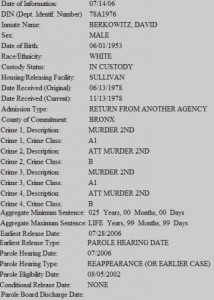 When the police were dispatched on the welfare check, they may have checked Elliott’s record in the computer. If they had, they would have been made aware of his two previous interactions with the police. The first was when he alleged that he was victim of an assault. The investigation concluded he was the likely aggressor and no charges were brought. He had reportedly attempted to push some females off a ledge at a house party, but he was the one who ultimately fell and in the process, he broke his ankle. The second interaction was when he accused one of his roommates of stealing $22 worth of candles. He successfully obtained a citizen’s arrest thus validating the accusation.
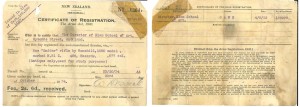 Rodger also legally purchased and possessed three handguns. Approximately 1 in 4 Californians own at least one gun. For the officers arriving at the residence, there were no red flags, other than his mother’s concern.
Based on the U.S. Supreme Court case O’Conner v Donaldson, 422 U.S. 563 (1975), the threshold for an involuntary commitment is to determine if someone is a danger to self or to others. Under Section 5150 of the California Welfare and Institutions Code, a person suspected to having a mental disorder that makes him or her a danger to self, a danger to others, and/or gravely disabled, can be involuntarily committed. An essential question is: are they homicidal or suicidal? Having walked in the shoes of the officers who interviewed Rodger, I understand the great difficulty of conducting such an assessment in fifteen minutes. Especially with someone as organized and cunning as Rodger.
 For those who do meet the threshold to be committed, the trained mental health practitioners who are trying to help them face serious disadvantages. Due to budget cutbacks, they are under-staffed and lack bed space. They have little choice other than to attempt to merely stabilize the committed individuals. Many crisis stabilization centers are focused on short-term treatments with psychotropic medications and a referral to a community-based program. The involuntary commitment is for up to 72 hours. If the person is assessed by a clinician and viewed as stable, they can be released sooner. With $1.8 billion in budget cuts from 2009 and 2011, our mental health system is collapsing. According to E. Fuller Torrey, only 1% of those suffering from mental illness are actually dangerous, particularly if they receive adequate treatment. According to the National Association of Mental Illness, 1 in 17 people suffer from some form of mental illness.
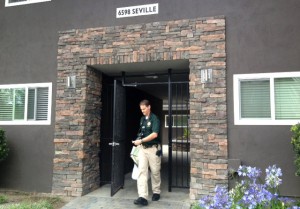 Rodgers wrote of the fear he felt when he answered the door and saw the seven officers standing there: “As soon as I saw those cops, the biggest fear I had ever felt in my life overcame me.” The officers interviewed him. He denied being suicidal and told them it was all a misunderstanding. After viewing his videos, one can easily understand how this relatively poised young man could present as stable and non-threatening.
When conducting threat assessment interviews, I always strived to gain voluntary admittance to the subject’s domicile. Despite increasing their level of paranoia and distrust, most subjects of welfare checks are willing to allow access to the interior of their home, so as to avoid the embarrassment of a front-step interview in front of nosy neighbors. During the interviews, I would ask for consent to check their living space. I wanted to obtain a rational assessment of their living conditions, to see what they were reading, and observe anything else of evidentiary value that might be exposed in plain sight.
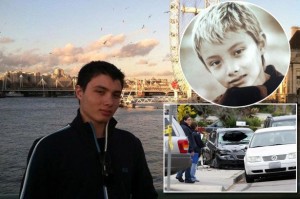 Elliott could have denied access to the officers and there’s little they could have done. The Fourth Amendment provides all of us with safeguards against unreasonable search and seizure. In this case, despite wishful thinking on the part of impassioned observers, based on the information known to the officers, there is not a judge sitting on the bench who would have approved a search warrant of Rodger’s premises.
In his Manifesto, Elliott describes his feelings when the police arrived:
“If they had demanded to search my room… That would have ended everything. For a few horrible seconds I thought it was all over. When they left, the biggest wave of relief swept over me. It was so scary. If that was the case, the police would have searched my room, found all of my guns and weapons, along with my writings about what I plan to do with them. I would have been thrown in jail, denied of the chance to exact revenge on my enemies. I can’t imagine a hell darker than that. Thankfully, that wasn’t the case, but it was so close.”
Elliott’s paranoia increased after the police visit. He wrote:
 “All it takes is for one person to call the police and tell them that they think I’m going to perpetrate a shooting, and the police will be coming to my door again, demanding to search my room. For the next few days, I felt extremely fearful that they could show up anytime. I kept one of my handguns with a few loaded magazines near me just in case such a thing did happen. If they did show up, I would have to try to quickly shoot them all and escape out the back window. I would then have to perform a hasty mockery of my plans, with the police on my tail. That will ruin everything. Thankfully, all suspicion of me was dropped after I took down the videos from YouTube, and the police never came back.”
Once again, the families of the innocent victims are mourning the loss of their children at the hands of a mass killer who is exacting his revenge on society.
For more information on the mindset of mass killers, Mike Roche is the author of Mass Killers: How You Can Identify Workplace, School and Public Killers Before They Strike.
Click here to view Mike Roche’s book on the mindset of the mass killer
Please click here to view Mike Roche’s previous posts:
Family Annihilator Darin Campbell Murders His Family and Torches Lavish Tampa Mansion
Alex Hribal Was Desperate and Said He Wanted Someone to Kill Him
Columbia Mall Shooter Darion Aguilar Followed the Model of Notorious Mass Murderers
Peter Lanza Speaks: The Lethal and Unvarnished Truth about His Son Adam
Fire Department and California Highway Patrol Go 9 Rounds: Win, Lose or Draw?
The Boston Bombers: A Tale of Two Troubled Brothers
Don’t Text at the Movies, The Life You Lose May Be Your Own!
Killers and the Catcher in the Rye
 Mike Roche has over three decades of law enforcement experience. He began his career with the Little Rock Police Department, and spent twenty-two years with the U.S. Secret Service. The last fifteen years of his career were focused on conducting behavioral threat assessments of those threatening to engage in targeted violence. He is the author of three novels and two nonfiction works on mass murder and also rapport building. Retired, Mike is currently a security consultant at Protective Threat LLC, and an adjunct instructor at Saint Leo University. He resides in Florida with his family.
Mass Killers: How you Can Identify, Workplace, School, or Public Killers Before They Strikehttp://www.amazon.com/Mass-
Face 2 Face: Observation, Interviewing and Rapport Building Skills: an Ex-Secret Service Agent’s Guidehttp://www.amazon.com/Face-2-
The Blue Monster http://www.amazon.com/The-
Coins of Death http://www.amazon.com/Coins-
If you enjoyed this article, please consider sharing it!



Excellent piece, Mike. It seems all the signs of his looming madness were there. Of course, hindsight is like that.
Dacia, Hindsight is always 20/20. We as a nation must start listening to the pre-incident leakage of the mass killers and intervene when possible. Existing laws restrict the community response.
Well done post, Mike. I agree with you that the police could not have done much to prevent this madman’s rampage, except perhaps to ask to view Elliot’s living space (they very well could have made such a request, despite the statement in the diary that the police did not make a request to search his apartment). Even then, there may not have been anything in plain sight during the living space check to alert the police that Elliot had homicidal or suicidal intentions.
Thank you, Rick. I appreciate your comments.
[…] How Elliott Rodger Tricked Law Enforcement (and Lived to Kill Another Day) […]