

Transgender CeCe McDonald Out of Prison but Not Out of the Woods
by Lise LaSalle
On the evening of June 5, 2011, everything was going well for Latavia Taylor. She had just moved into a new apartment in a character building in Minneapolis and her friend, CeCe McDonald, was the best roommate she could have asked for. They were close and got along so well that they referred to each other as cousins.
“If I am hungry, she will bring something to eat,” Taylor says of McDonald. “If I don’t have no clothes, no shoes, she will buy it.”
That very night, CeCe and Latavia were entertaining three of their friends: Larry Tyaries Thomas (Ty), Zavawn Smith (Zay) and Roneal Harris. They barbecued in the backyard and according to Ty Thomas, lounged around chillin’, drinking and smoking.
At around 11:30 p.m., Latavia suggested they walk to Cub Foods to grab a bite.
 The store was little more than a half-mile from the apartment: a right out the door, a quick left on 29th Street, and another right along Minnehaha Avenue would bring them to the parking lot shared by Cub Foods and Target.
CeCe McDonald, who was a transgender woman of color, accompanied her four friends to the store. As they neared Cub Foods, they began to hear catcalls coming from a group of white people standing outside a local bar.
This came as no surprise to CeCe who had often been the object of that type of uncivilized behavior. According to CeCe’s’s friend, Ty Thomas, the taunting grew very ugly and became racist in nature with homophobic slurs.
 In a move hard to comprehend, McDonald decided to confront her tormentors. In the altercation that followed, a woman named Molly Shannon Flaherty smashed a glass across CeCe’s face, slicing her severely. The rest of the story is murky, but what is known is that in the midst of the fight that ensued, Flaherty’s former boyfriend, Dean Schmitz, ended up dead with a pair of scissors planted in his chest.
Gary Gilbert worked security at the Schooner Tavern and he called 911 to get help. All he could see and say was “Black lady with a knife.” Meanwhile, Dean Schmitz was laying on the sidewalk in front of the bar looking seriously injured.
When the 911 operator asked for a description of the culprit, Gilbert followed the suspect as she fled the scene. He described her as wearing shorts. She had a weave, was 5’7’’ or 5’8’’ and appeared to be heading towards Target.
A man named Anthony Stoneburg happened to be in the area visiting his aunt when he stumbled upon the bloody scene. Schmitz’s stab wound was ¾ inch long and was at least three inches deep and had punctured his heart. Stoneburg tried his best to help Schmitz whose breathing was labored and to stop the bleeding.
 Molly Flaherty was kneeling beside Schmitz and could be heard trying to comfort him. He died in the ambulance on the way to the hospital.
In the meantime, Minneapolis officers had found their suspect in the parking lot of Cub Foods across from Schooner Tavern. In fact, she is the one who flagged down the officers as soon as she spotted them. As a 23-year-old woman who had studied fashion at the local Community College, CeCe did not have the look or the attitude of a dangerous killer. Nor did she have any previous history of violence.
Nothing about this case would turn out to be as it appeared.
In the 11 months following Schmitz’s death, the details about that night were repeated countless times to police, lawyers, journalists, politicians and protestors. The facts remained quite constant but the huge debate surrounding the case remained: Who is the protagonist and who is the villain?
McDonald was accused of Schmitz’s murder even though she insisted that it was a case of self-defence. Apparently, he had approached her in a threatening manner and had ignored her warnings to back away. She was convicted of second-degree manslaughter and sentenced to 41 months in prison which she served at a men’s facility. According to some activists, this was a violation of the 2003 Prison Rape Elimination Act
“I’m sure that to Dean’s family, he was a loving, caring person,’’ McDonald told the Court at her sentencing hearing, according to the Star Tribune. “But that is not what I saw that night. I saw a racist, transphobic, narcissistic bigot who did not have any regard for my friends and I.’’
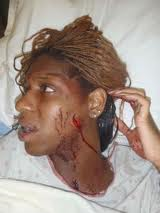 McDonald’s supporters were outraged after it was revealed that Schmitz had a lengthy criminal record and ties to white power organizations. Advocates repeatedly called for the charges against CeCe to be dropped, but the prosecutor proceeded with the case.
Her supporters declared her a victim of a brutal attack and balked at her being charged with any crime. To some, she became some kind of hero, a transgender Matthew Shepard, who was the young man who was tied to a fence and murdered because he was gay.
“This could have been any of us,” says Billy Navaro, a transgender man and co-founder of Support CeCe, an advocacy group for McDonald. “She wasn’t asking for any trouble whatsoever. She was going to the grocery store with her family.”
Even City Councilman Cam Gordon publicly announced his support for McDonald, calling the incident “another example of transgender women of color being targeted for hate-and-bias-related violence.”
National transgender celebrities, including author and activist Leslie Fineberg, traveled to Minneapolis to visit McDonald in jail and attend her court appearances. Supporters held rallies and dance parties outside the Hennepin County Jail in her honor.
But Hennepin County Attorney Michael Freeman did not consider McDonald a hero. He insisted that the case was unfairly politicized and that the fact that McDonald is a transgender was inconsequential.
“We see all kinds of crime by all sorts of people against all sorts of other people,” said Freeman. “We try to review it as racially blind, as sexual-orientation  blind, as economically blind as we can be. The scales of justice have got a blindfold on them for a reason, and we try to follow that.”
Could the tragedy that took place in front of the Schooner Tavern on the night of June 5, 2011, have been more about bad timing than a homophobic/racist incident? Was it a chance meeting between two very different people that was bound to explode?
In January 2014, McDonald was granted an early release from prison after serving two-thirds of her sentence. Advocacy groups welcomed the news but continue to call for better legal protections for the LGBT community which is often victimized by hate crimes.
The case “reinforced the belief there is a double standard applied to us. CeCe was trying to defend herself from hate violence. The charges against her did not fit the crime,” Transgender Law Center senior strategist Cecilia Chung told a reporter.
* * * * *
-
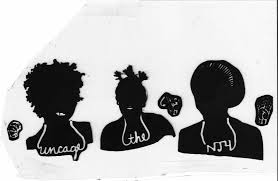 In 2006, four New Jersey African-American lesbian and gender-non-conforming women were sent to prison for between three-and-a-half and 11 years for defending themselves against a man who sexually propositioned them and subsequently choked and spat on them, pulled out their hair, and threatened to sexually assault them. The women are known among LGBT advocates as the “New Jersey 4.”
- On December 5, 2013, Betty Skinner, a 52-year-old disabled transgender woman, was found dead in her Cleveland assisted-living facility. She had been beaten severely and died of blunt force trauma to the head.
- Nearby, less than a day later, a 22-year-old transgender woman named Brittany Nicole Kidd Stergis was found shot to death in her car.
The murders were the second and third killings of transgender women in Cleveland in 2013. In April, Cemia “CeCe” Dove, 20, was found tied to a concrete block at the bottom of a Cuyahoga County pond.
Police told the Cleveland Plain Dealer that the crimes didn’t appear to be related, and neither was deemed a hate crime. But Aaron Eckhardt of the Buckeye Region Anti-Violence Organization, which fights LGBT discrimination, states, “It’s hard to believe otherwise.”
 On August 16, 2013, lslan Nettles was walking on the streets of New York City with friends when a group of young men approached her, learned she was a transgender woman, and began taunting and maliciously beating her in front of a police precinct in Harlem.
The fashion design student with delicate features was punched in the face, knocked to the ground and beaten until she lost consciousness.
“They were called f****, they were called he-she’s, she males, things of that nature,” Nettles’ mother told a local reporter.
Islan Nettles fell into a coma she would never awake from. She died after being taken off of life support at the tender age of 21. Her assailant, Paris Wilson, was booked on a misdemeanor assault charge and freed on $2,000 bail. The charges against Wilson were subsequently dropped as the prosecution did not have clear evidence that he was the one who had committed the crime. Even though he was identified by several witnesses at the scene, Judge Statsinger and the prosecutors were not satisfied with this witness identification.
The site of the violence, near a police station, highlights a startling increase in hate crimes against the LGBT community, and what some view as a historic lack of police empathy or interest.
In January 2014, a 16-year-old high school transgender student in Hercules, Calif., Jewelyes Gutierrez, was brought up on battery charges by local authorities for defending herself against bullies at her school. None of her assailants have been charged.
 Local law enforcement isn’t commenting on Gutierrez’s case — but in Minneapolis, officials have been consistent in their contention that McDonald is a criminal. Some say she has paid a debt to society that she didn’t owe, while others perceive her punishment as having been too light.
McDonald could have easily been sentenced to twenty-five years and her 41 month sentence was judged as very reasonable by many members of the public. Her advocates, however, would not have any of it — especially after finding out that Molly Flaherty, who was nicknamed the “Black Widow’, was a meth head and a troublemaker with a record. Schmitz, who is survived by one child, also had a criminal background.
I would like to think that Molly Flaherty and her friends realize that their outrageously abusive behavior contributed to the death of their friend. Slashing someone’s face can only entice violence. But I also believe that McDonald and her group, despite the many aggravating factors, had no business confronting these losers. If they had walked away, none of this would have happened. Was CeCe really only defending herself against her assailant? If so, she should not have been charged, but it was not a clear cut case.
At trial, McDonald said that they tried to walk away but that Flaherty would not let them. Gary Gilbert recalled that McDonald appeared to be holding a blade, while Schmitz had his fists clenched. According to a witness, Schmitz said to McDonald “you gonna stab me, you bitch?” Schmitz then hunched over, put his hand to his chest and said “you stabbed me,” to which McDonald allegedly replied, “Yes I did.”
 Molly Flaherty was charged in May 2012 with second-degree assault with a deadly weapon and third-degree assault causing substantial bodily harm. Her case was referred to the Washington County Attorney’s Office to avoid a conflict of interest. She was subsequently sentenced to six months jail time to be followed by probation.
The case of beautiful Islan Nettles is unequivocally one of unprovoked attack leading to death, as opposed to McDonald’s case. And the perpetrator walked. In my opinion, she is a more suitable poster girl for transgender injustice than CeCe. I have no doubt that many members of the LGBT community are not out of the woods and are still at risk. But as far as McDonald goes, I am not convinced of her total lack of responsibility in the tragedy.
What do you think?
If you enjoyed this article, please consider sharing it!



Such a tragic story. One of many things that stands out for me is how much our determination not to “prejudice” the jury actually hurts the defendant. If Schmitz had ties to a hate group and a history of violent crime, juries should be allowed to hear that and take it into consideration. She certainly didn’t go out looking for trouble. She was taunted and provoked, which should speak volumes in this case – but apparently doesn’t count here.
McDonald seems to be another in a long list of people society casts aside as defective. Then we act surprised and horrified when they defend themselves against us.
There seems to be a tendency in American jurisprudence in which juries are not allowed to receive much background information on defendants and/or victims though I guess it changes from trial to trial. This is an issue that Rick Stack should weigh in on.
From the messages I get on twitter, most support that it was self-defence and that CeCe’s confronting them had no bearing on it.
Very interesting.
Patrick – Conventional wisdom would seem to hold that character evidence of the victim of a crime is not admissible in defending criminal charges. The Federal Rules of Evidence, however, provide otherwise.
Rule 404(a)(2) provides that in a criminal case, other than one involving alleged sexual misconduct [discussed below], the accused may offer evidence of a “pertinent trait of character” of the alleged victim of the crime, and the prosecution may rebut such evidence. In cases where character evidence is admissible, it may be proven by testimony as to reputation or testimony in the form of an opinion. On cross-examination, inquiry is allowable as to whether a reputation witness has heard of particular instances of conduct pertinent to the trait in question. See Fed. R. Evid. 405(a). In cases where character or a character trait of a person is “an essential element” of a charge, claim, or defense, proof may be made by specific instances of that person’s conduct. Fed. R. Evid. 405(b).
As a general rule, in sexual misconduct cases, evidence offered to prove that any alleged victim engaged in other sexual behavior or to prove any alleged victim’s sexual predisposition is inadmissible. Fed. R. Evid. 412(a). That general rule is subject to Mack-truck-like exceptions. In a criminal case, the following evidence is admissible: (A) evidence of specific instances of sexual behavior by the alleged victim offered to prove that a person other than the accused was the source of semen, injury or other physical evidence; (B) evidence of specific instances of sexual behavior by the alleged victim offered by the accused to prove consent; and (C) evidence which, if excluded, would violate the defendant’s constitutional rights. Fed. R. Evid. 412(b)(1). Evidence admissible under exception (B), above, would include prior instances of sexual activities between the alleged victim and the accused, and statements in which the victim expressed an intent to engage in sexual intercourse with the accused, or voiced sexual fantasies involving the accused. Evidence admissible under exception (C), above, would include statements in which the victim expressed an intent to have sex with the first person encountered on a particular occasion, the exclusion of which could violate the due process right of a rape defendant seeking to prove consent.
How do the above principles apply to CeCe’s case? She and/or other percipient witness obviously would have been permitted to testify about the vile and derogatory comments that the alleged victim made to her and the assault committed against her by the victim’s boyfriend. In addition, to the extent that the Court found the victim’s membership in white supremacist organizations a “pertinent trait of character” or “an essential element” of CeCe’s defense, see Fed. R. Evid. 404(a)(2) and 405(b), she would have been permitted to introduce such evidence. The judge, however, could find that the victim’s affiliation with white supremacist organizations was not sufficiently connected to one of his character traits in order to be admissible.
I hope that your readers find this explication at least somewhat helpful.
Thank you Rick for this detailed explanation. But if we let character evidence come in, doesn’t it open the door to let character evidence come in for the defendant also? I am thinking Zimmerman here where they avoided talking about his character and did the same with Martin.
I have seen cases of rape where the judge did not let evidence of another rape come in. You are right about the Mack-truck loopholes.
Lise – You’ve made a good point about the admission of character evidence of the alleged victim being linked to that of the accused. As a general rule, evidence of a person’s character or a trait of character is inadmissible “for the purpose of proving action in conformity therewith on a particular occasion.” Fed. R. Evid. 404(a). Under the Federal Rules of Evidence, however, when the accused attacks the character of the alleged victim under Rule 404(a)(2), the “door is opened” to an attack on the same character trait of the accused under Rule 404(a)(1). Thus, the accused may introduce pertinent evidence of the character of the alleged victim, such as to support a claim of self-defense to a charge of homicide or consent in the case of rape, and the prosecutor may introduce similar evidence in rebuttal of the character evidence, or in a homicide case, to rebut the claim that the decedent was the first aggressor. The reason for this symmetry in the admissibility of character evidence is to prevent the accused from attacking the alleged victim’s character and yet remain shielded from the disclosure of equally relevant evidence concerning the same character trait of the accused. Thus, if the accused in a murder case offers evidence of the alleged victim’s violent disposition to bolster a claim of self-defense, the government may introduce evidence that the accused has a violent character. The introduction of character evidence of both the alleged victim and the accused enables the jury to obtain a more complete picture as to who was the initial aggressor.
The main thing to keep in mind about character evidence is that due to constitutional concerns, the trial judge is very solicitous about protecting the defendant’s due process rights by limiting the admissibility of character evidence (except for purposes of cross-examination or rebuttal, if defendant “opened the door” by testifying, or having a witness testify, about defendant’s good character, or if the defendant introduced evidence of the alleged victim’s bad character). The reason for that is to ensure that defendant is not convicted of a crime or “bad act” with which he/she has not been charged. In that regard, evidence of other crimes, wrongs, or bad acts, is not admissible to show that the person acted in the same way on the occasion in question but is admissible for other purposes, such as “proof of motive, opportunity, intent, preparation, plan, knowledge, identity, or absence of mistake or accident.” Fed. R. Evid. 404(b). The court, however, may exclude evidence of other crimes or bad acts (as it can other relevant evidence) if the probative value of such evidence is “substantially outweighed by the danger of unfair prejudice, confusion of the issues, or misleading the jury, or by considerations of undue delay, waste of time, or needless presentation of cumulative evidence.” Fed. R. Evid. 403.
A major exception to the general inadmissibility of other crimes or bad acts evidence applies to the character for truthfulness of a witness (including an accused) with evidence of a prior felony conviction not more than 10 years old. Fed. R. Evid. 609(a) and (b). This rule explains why many defendants do not take the stand because if they do, their past convictions for crimes relevant to credibility (e.g., crimes whose elements required proof or admission of an act of dishonesty or false statement) would be admissible.
Another major exception to the general rule against admissibility of evidence of other crimes or bad acts applies in sexual assault and child molestation cases. In the mid-1990′s, Federal Rules of Evidence 413 and 414 were promulgated, which allow for the introduction of evidence of the defendant’s commission of other offenses of sexual assault or child molestation, and may “considered for its bearing on any matter to which it is relevant.”
Thank you for your reply Darcia. They don’t want to prejudice the jury and at times, it gives an incomplete view of the situation. I would hope that they realized that Schmitz was a racist by the slurs and insults he used.
My only qualm in this affair is that CeCe crossed the street to confront them. She probably blew up but IMO, it could have been avoided. Why go there and not walk away? Once in their face, it turned so badly. But I am quite glad she was not given 25 years which could have been a possibility. I am still confused about this case.
I understand the issue of not wanting to prejudice the jury, providing it works both ways. But it doesn’t. In too many cases, the jury is given all sorts of dirt on the victim, but little to no background on the accused. That is sliding the scales in the wrong direction.
Confronting the group was definitely a bad decision on CeCe’s part. In a way, I understand it though. She had probably reached her breaking point. One too many insults on a bad day. Or she was reacting to being humiliated in front of her friends.
A fine post. The second degree manslaughter conviction seems fair, in this case. If you or I or anybody else (black, white, transgender, whatever) go out of our way to cross the street and confront some idiots shouting insults, then we bear some responsibility for escalating the situation. If McDonald had kept on walking and the idiots came after her, that’s a different story.
I agree that walking away would have been the right way to handle the situation for anyone. The fact that she had scissors bothered me also.
Thank you Rick for the detailed answer. You are a real gold mine.
Lise — Glad to share my legal knowledge. You were certainly on the right track when it comes to admitting character evidence. One of the overarching themes in that area is that if a defendant chooses to go down that road by impugning the character of the alleged victim, the prosecutor can then “fight fire with fire.”
And fight with fire they will…
Also a walking encyclopedia of relevant legal information. Amazing!
. . . or useless trivia, as the case may be.
You should be the one writing posts. Just sayin
Did you, perhaps, mean for this comment to go to Rick? If so, I heartily concur.
Yes I did.
Rick, Dude, our Oracle has spoken and she wants you to write posts in addition to your remarkably informative comments. We the people are hungry.
Patrick — Since the Oracle of the Okanagan (Lise) has spoken, I’ll have to get cracking on those promised posts (in between posting my billable hours).
The Oracle has told me privately that’s she’s gonna kick ________ (need I say more) if you don’t produce. Did you notice that the mighty U Wisc b’ball team came from 12 down at halftime yesterday and is on it’s way to yet another Sweet 16 trip?
I definitely don’t want to get on the wrong side of the Oracle of the Okanagan, aka Vixen of ___________! I better atone (write posts), or else Lise will send me to the dungeon of Jessica Barton, Pro Domme, for suitable “reeducation.”

Well the Oracle of the Okanagan could go Ogopogo on you if she does not see an article written soon. The dungeon is reserved for after…
Lise – I have my marching orders now.
I didn’t mean to imply that you’re from the Okanagan, as that’s quite a ways inland, since people from that part of Canada might be referred to as country bumpkins. (Not to disparage country folk, as I’m from eastern Iowa).