

Edward Snowden Is Man of the Year 2013
by BJW Nashe
Six months ago, no one had heard of Edward Snowden, a former CIA employee who was at the time working as a U.S. National Security Agency (NSA) contractor for the Booz Allen Hamilton consulting firm. Now Snowden is world-famous — a deeply polarizing figure who is either a heroic whistleblower or a traitor and a criminal, depending on one’s point of view. All the fame and controversy stems from Snowden’s unauthorized release of 200,000 classified document files pertaining to the NSA’s massive surveillance programs.
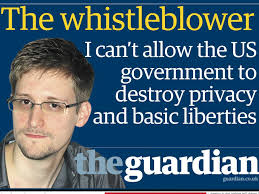
 Those of us who are highly skeptical of secret government programs — especially when they pose a threat to our fundamental constitutional rights — view Snowden’s revelations as a bold act of conscience, carefully undertaken in order to force an international debate on issues related to surveillance and privacy. Thus, on December 9th, The Guardian named Snowden “Man of the Year.” Columnists and bloggers for The New Yorker, The Daily Beast, Slate, and The Washington Post followed suit. Time Magazine was widely criticized for not selecting Snowden for the honor, choosing Pope Francis instead.
The U.S. government, on the other hand, tends to view Snowden as “Most Wanted Man of the Year.” Officials consider him to be a fugitive from justice, who should be arrested and prosecuted for numerous crimes, rather than celebrated as a hero. If captured, Snowden will face numerous charges including espionage and theft of government property, which could send him to prison for several decades. The government tends to frown on unauthorized release of its most damaging secrets.
 That possibility of Snowden facing a trial seems less likely with the passing of each month, however. Throughout the media firestorm that followed his NSA revelations, Snowden has managed to remain safe beyond the reach of U.S. authorities. He is now living in Moscow, where he has been granted temporary asylum by the Russian government. His journey from here to there reads like a spy novel. After departing Hawaii for Hong Kong, Snowden met secretly with Guardian journalists Glenn Greenwald and Ewen MacAskill, as well as independent filmmaker Laura Poitras. After handing over his treasure trove of confidential information about NSA surveillance capabilities, Snowden remained in Hong Kong. Once Greenwald’s first story ran, Snowden was officially on the lam. Rather than hide completely, he contacted the press to identify himself as the source of the leaked information. Then he became the subject of international drama as debate swirled around which country would agree to take him in. He spent several days hunkered down in a Moscow airport terminal, while a deal with the Russians was hammered out.
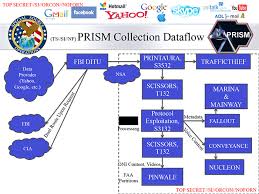
Meanwhile, regardless of one’s opinion about the whole affair, it is difficult to deny the scope of Snowden’s impact both in the U.S. and throughout the world. While the end result of his revelations remains unclear — are we headed for serious oversight and reform, or merely a PR campaign followed by retrenched power? — we can all agree that the lid has been blown off of the NSA’s secret surveillance programs. No longer can this agency operate entirely hidden from all public scrutiny, with no questions asked. What Snowden showed us, as summarized by the Guardian, has been quite astonishing:
“… a dragnet programme to scoop up digital activities direct from the servers of the biggest US tech companies; a tap on fibreoptic cables to gather huge amounts of data flowing in and out of the UK; a computer program to vacuum up phone records of millions of Americans; a codebreaking effort to crack the encryption system that underpins the safety and security of the internet.”
 A recent ruling by a U.S. federal district judge serves to validate Snowden as a legitimate whistleblower. On December 15th, Judge Richard J. Leon of the Federal District Court for the District of Columbia ordered the government to stop collecting data on the personal calls of two plaintiffs, and to destroy the records of their calling histories. According to a story in the New York Times, Judge Leon claimed the NSA program “that is systematically keeping records of all Americans’ phone calls most likely violates the Constitution, describing its technology as ‘almost Orwellian’ and suggesting that James Madison would be ‘aghast’ to learn that the government was encroaching on liberty in such a way.” The Times went on to quote from the judge’s strongly worded, 68 page decision:
“I cannot imagine a more ‘indiscriminate’ and ‘arbitrary’ invasion than this systematic and high-tech collection and retention of personal data on virtually every single citizen for purposes of querying and analyzing it without prior judicial approval… Surely, such a program infringes on ‘that degree of privacy’ that the founders enshrined in the Fourth Amendment.”
Snowden himself was quick to issue a statement praising the ruling in this case, which is the first successful legal challenge brought against the NSA program since it was first made public last June by Snowden’s leaks to the Guardian. From Moscow, Snowden wrote:
“I acted on my belief that the NSA’s mass surveillance programs would not withstand a constitutional challenge, and that the American public deserved a chance to see these issues determined by open courts… Today, a secret program authorized by a secret court was, when exposed to the light of day, found to violate Americans’ rights. It is the first of many.”
 The vilification of Snowden by American politicians and media pundits has been a particularly craven form of submission to establishment power and authority — similar to the way in which Chelsea Manning was attacked and derided for providing secret information to WikiLeaks in 2010. There has been plenty of name-calling on cable TV news shows, where the word “traitor” is tossed around quite casually in regard to Snowden. And we have seen several high profile anti-Snowden pieces written by established political columnists such as Thomas Friedman and David Brooks at the New York Times, Jeffrey Toobin at The New Yorker, and Richard Cohen at The Washington Post. It is worth noting that all of these men were dreadfully wrong at the start of the Iraq war. At the time, they didn’t hesitate to criticize anyone who disagreed with the Bush Administration’s claims regarding “Saddam’s weapons of mass destruction.” What reason do we have to listen to what they are saying now about Snowden and the NSA? Likewise, when Roger Simon of Politico declares that Snowden has “all the qualifications a grocery bagger,” he simply cannot be taken seriously by anyone who has been closely following the story.
The anti-Snowden crowd is unwilling to acknowledge a simple part of the equation here — namely, the fact that the public can realistically gain access to certain crucial information only by means of unauthorized leaks and technically illegal operations. There is often no other way to make the information public. It remains hidden if we rely on established channels of communication. Thus it is highly disingenuous for government officials and media pundits to concur, on the one hand, that our debate on the NSA is valuable and worthwhile, and then go on to proclaim that Snowden nonetheless is a traitor who should be prosecuted. This is similar to arguing that while we all love to eat dessert, still the bakers of pies ought to be thrown in jail, because their ovens pose a threat to our “safety.” In regard to the NSA, without Snowden serving us the pie, we would have never been able to relish the flavor of this whole debate.
The lengths to which the U.S. government will go to secretly expand its power, including its ability to spy on its own citizens and the citizens of its allies, is a startling reminder of the dangers inherent in what President Dwight Eisenhower called the military industrial complex. Sophisticated new technology has now led to a further refinement of these dangers, in the form of our growing intelligence security state apparatus. Since 9-11 and the start of the War on Terror, this apparatus has rapidly expanded. The fact that large numbers of journalists are, in this context, all too willing to declare allegiance to the government and demonize whistleblowers, rather than investigate possible abuses of power, is deeply troubling.
 Snowden’s first in-person interview since his revelations went public appeared in the Washington Post on December 24th. As CNN reports, during his wide-ranging conversation with reporter Barton Gellman, Snowden makes five main points: 1) His mission is “already accomplished” because of the serious public debate it started; 2) He has become an “indoor cat,” living as a semi-recluse due to his high profile case; 3) He raised several warning flags before going public, sharing his deep concerns over privacy issues with colleagues and superiors; 4) The intelligence community’s overseers “elected” him as a whistleblower, leaving him no choice because of their failure to serve the interests of the American people; 5) He is unfazed by personal attacks, insisting that the NSA is the focus of the story, not him.
None of Snowden’s actions or remarks suggest malice or treason. If the U.S. government wanted to demonstrate to its citizens and to the people of the world that it was truly committed to democratic values and principles, Snowden would be granted amnesty for his “crimes” and be allowed to live as a free man anywhere he chooses to do so. He poses no threat to anyone’s safety. In fact, he is an asset. Perhaps he should be used as a consultant on NSA oversight issues, working as a kind of liaison with Congress. The fact that this is no more likely to occur than an alien invasion from outer space is disturbing, to say the least. One would think that people on the left and the right might agree on basic constitutional rights such as the protections guaranteed by the Fourth Amendment. This may be true for many of us outside of Washington. Inside the Beltway, it’s a whole different story. These days, show us anything that Senator Diane Feinstein and Senator Ted Cruz both agree on, and we can be sure that it smells rotten. With Snowden, both senators are marching to the drum beat of prosecution.
A growing number of us in the greater world community, however, tend to agree with The Guardian readers who voted Edward Snowden the “Man of the Year” for 2013. As The Guardian reported on December 9th:
“It is this personal sacrifice, as much as his revelations, that impressed most readers who voted for him.
“‘He gave his future for the sake of democratic values, transparency, and freedom,’ said Miriam Bergholz. Colin Walker wrote: ‘We need people like him to have the courage to forget about their own life in the cause of other people’s freedom. Let’s face it, his life is over as even if he goes back to the US he will face decades in prison and the personal sacrifice he has made is immense.’ One commenter, identifying themselves as ‘irememberamerica,’ said he voted for Snowden ‘for his extraordinary and exemplary courage, and the historic value of his daring act. At every step, he has displayed an astonishing integrity and presence of mind. He is a great American and international patriot.’
No one denies that Snowden broke the law when he leaked confidential information to reporters. The larger question is whether his law-breaking was justified. Sometimes morality trumps legality. Snowden made a moral choice to release information that he thought the public had a right to know about. He was acting for the common good, in a manner consistent with our fundamental democratic values. No matter what the outcome of his own situation, Snowden’s revelations have had an impact that is unmatched by any other public figure in 2013. He will go down in history as a man who risked his own safety and security in order to take a stand and do the right thing for all Americans. For this he has earned our respect and admiration.
If you enjoyed this article, please consider sharing it!



BJW – You’ve written another excellent post! Time Magazine got it wrong in not at least naming Pope Francis and Edward Snowden as co-persons of the year. It would have been an appropriate co-recognition, as Pope Francis has been a force railing against unregulated capitalism, while Snowden has outed the national security intelligence apparatus and the quisling U.S. internet providers who collaborated in that illegal “intelligence” gathering operation.
Long live Edward Snowden, Julian Assange, and future whistleblower-patriots! In the immortal words of the late activist Mario Savio:
“There’s a time when the operation of the machine becomes so odious, makes you so sick at heart, that you can’t take part! You can’t even passively take part! And you’ve got to put your bodies upon the gears and upon the wheels … upon the levers, upon all the apparatus, and you’ve got to make it stop! And you’ve got to indicate to the people who run it, to the people who own it, that unless you’re free, the machine will be prevented from working at all!”
(December 2, 1964 address on the steps of Sproul Hall, Berkeley, CA).
Thanks, Rick. And while I’m no fan of the Catholic Church, I realize that Pope Francis has been taking significant steps in the right direction.
Assange and WikiLeaks played a key role in getting Snowden safely into Russia. That whole process was quite fascinating.
Here in the USA, it would appear that the constitutionality of certain NSA programs will be decided in a Supreme Court ruling, at some point. Is that where you see this headed?
Great quote from Mario Savio.
BJW, the legality of the NSA’s warrantless surveillance program will ultimately be decided by the Supreme Court. I just hope that Obama gets to replace one of the conservative Catholic-Phalangist Justices with a less right-wing Justice before that case gets decided but doubt that will occur. We can only hope that Justice Kennedy will vote the right way. Justices Robert, Scalia, Thomas, and Alito are clearly in the tank for the NSA, being so-called “small-government” conservatives (except when it comes to the government invading the privacy rights of ordinary citizens, with which they are perfectly comfortable).
Ironically, Richard Leon, the District Judge (appointed by Bush, Jr.) who recently held that the NSA’s program is likely unconstitutional was the lead Chief Minority (GOP) Counsel for the Senate Select Committee to Investigate Covert Arms Transactions with Iran. In that capacity, Mr. Leon effectively was tasked with covering up the involvement of Reagan, Bush, Sr., and GOP politicos in the Iran-Contra scandal of the 1980′s. It’s been reported that Mr. Leon intimidated certain witnesses from coming forward to testify against the Reagan Administration during congressional hearings on the Iran-Contra Affair. See http://consortiumnews.com/2013/12/17/judge-leons-dirty-climb-to-the-bench/; and http://consortiumnews.com/2011/11/09/who-is-judge-richard-leon/.
How do think Judge Leon would have ruled if this same NSA case had come to him while GW Bush was President? Just wondering.
Brilliantly presented perspective and bringing together of the details of the outrolling of this saga, Nashe.
It seems the UK has really adopted him as an example of heroism, starting with the Guardian, and yesterday we had Channel 4, the independent progressive alternative arts and culture TV network (not the BBC, as NPR erroneously stated), presenting him as their alternative this year to the Queen’s 3pm Christmas Day Speech. Did you hear it? It was jaw-droppingly in your face, enough to cause a rift in diplomatic relations between the US and the UK!!
Thanks, Pitch. I did not know that about Channel 4 in the UK. Will have to check that out. A bold move. I think Snowden also leaked plenty of information about the UK’s surveillance programs. British media is probably not as subservient as here in the USA, where we have entrenched corporate news agencies which are rewarded for (or pressured into) complicity with established power. A striking example: the “liberal” New York Times had their story on Bush’s warrantless wiretapping for a full year before they ran it. They held off due to political pressure. No wonder Snowden didn’t go there with his information.