

The Newtown Tragedy, One Year Later: Grief, Guns and the Hope of Healing
by BJW Nashe
On December 14, 2012, twenty children and six adults lost their lives in a senseless burst of gunfire at Sandy Hook Elementary School in Newtown, Connecticut. The perpetrator, 20 year-old Adam Lanza, had killed his mother before heading off to the school, where he ended his rampage by taking his own life.
As we reflect on this tragedy exactly one year later, our thoughts will range far and wide — from ethics and politics, to mental health, spirituality, and beyond. Here I’d like to focus on three areas of concern: first, Newtown’s request for privacy as they observe the one-year mark of the tragedy; second, the dilemma presented by what we now know about Adam Lanza, the young man at the root of the tragedy; and third, the ongoing challenges we all face as we seek to reduce gun violence — especially as it pertains to the safety of our children.
Newtown’s Right to Privacy
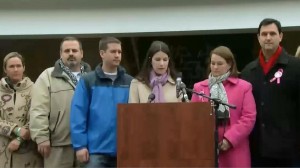 Twelve months after their community was ripped asunder by violence, the citizens of Newtown have updated us on their progress. They are doing the best they can, given the circumstances. In fact, their efforts have been quite remarkable. The people of Newtown have set a positive example for us all to follow as we grapple with the challenges faced by our own communities. The families of the victims have created a web site, MySandyHookFamily.org, in order to deal with their grief, share their hope, and connect with people who want to help. Many have gone on to do valuable work as activists promoting sensible gun legislation and gun safety awareness. Throughout their ordeal, Newtown residents have conducted themselves with honesty, intelligence, and grace
And now they are politely requesting that we leave them alone for a while — which is perfectly understandable and thoroughly justified. A year ago, they were invaded by an army of reporters and TV crews. Twelve months later, there is no reason for them to endure yet another barrage of media coverage — however well-intentioned it may be. And let’s face it, often it is not all that well-intentioned, when ratings and profits are involved.
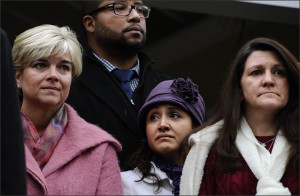 This past Monday, Newtown city officials and family members of the victims held two news conferences in which they proposed to answer all questions pertaining to the “anniversary,” so they might then proceed through the week without any further media attention. They expressed gratitude for all the support they have received, yet made it clear that they prefer to observe the one-year mark of the Sandy Hook massacre in private.
“Since that day we have been inundated with kindness, love, prayers, generosity from the entire world,” said Krista Rekos, whose daughter Jessica was one of the victims.
“We hope some small measure of good may be returned to the world,” said JoAnn Bacon, who is the mother of one of the victims, Charlotte Bacon.
Some families have left Newtown during this time period, wary of feeling overwhelmed by yet another big event, or over-burdened by a sense of deja vu. However, they will be lighting candles in memory of the ones they lost on the evening before the anniversary. The lighting of candles is to remember the last night they spent together.
 Newtown community leaders said that plans for the new school are expected to be in place early next year. A permanent memorial will not be built at the Sandy Hook site, but may be located nearby. Interim School Superintendent John R. Reed said his priority for this week was sticking to a normal routine. “I’m sure there will be some people who don’t come to school…,” Reed said. But he affirmed, “We are expecting a majority of our students.”
Newtown police will be a huge presence in town throughout the weekend, with assistance from neighboring towns. Newtown Police Chief Mike Kehoe said the officers who responded on that terrible day are staying strong. “I think we’re showing a resiliency that I expected from a law enforcement agency,” Kehoe said. “Yet we know we have a long road to go.”
First Selectman E. Patricia Llodra said that while each person is healing differently, in their own way and at their own pace, the town as a whole has shown incredible courage. “I’ve always known there’s a specialness about a country that can rally around and face that most horrible thing and still be able to look at each other and say, ‘I’m choosing to not let this destroy me,’” Llodra said. “I’m choosing to move forward in the best possible way.”
 Matt Crebin, who is the Senior Minister for the Newtown Congregational Church and coordinator of the Newtown Interfaith Clergy Association, compared the town’s recovery to a song describing how a community might be cracked, but soon the cracks start letting the light in. “We’ve been through a devastating experience,” said Pastor Crebin, adding, “in the midst of those cracks – that brokenness there’s a light shining through, the kindness of friends and neighbors through families doing amazing things.”
Many churches have scheduled special services for Saturday, and plan on keeping their doors open all day so people have a place to come and talk.
We can only hope that all news agencies will respect the wishes of Newtown residents, and stay out of their community on the weekend of December 14-15.
The Adam Lanza Dilemma
 We now know much more about Adam Lanza than we did in the days followed the Sandy Hook incident — but what we know only adds up to more uncertainty and bafflement. The recently released 48-page summary of the Connecticut state attorney’s report on the massacre — one of the worst in U.S. history — paints a disturbing picture of Lanza and the circumstances of his life. We learn that he was a young man suffering from mental illness who was allowed to isolate in his room, where he played violent video games and cultivated a creepy mass murder obsession, while his mother encouraged him to share her enthusiasm for firearms. His attack on the elementary school, it turns out, was meticulously planned. The reason for the attack remains a mystery, however. The summary report, even with all of the information gathered and analyzed, is unable to provide us with a motive or explanation for Lanza’s violent rampage.
 Lanza’a mental illness has been widely viewed as the main contributing factor in his outburst. Yet the official investigation was unable to draw any clear conclusions about this. Lanza’s mental health seems to have slipped into a societal black hole where it was left to deteriorate in seclusion, until he was finally driven to catastrophe. From an in-depth investigation, we might expect to find a detailed clinical history for Lanza, with hospitalizations and treatment, a progressive degeneration, and a penultimate breakdown. Not so. Based on this report, there is no way to know the full extent of Lanza’s mental illness, the signs of its worsening, or what role, if any, it may have played in leading him to mount an attack against school children. According to a November 25, 2013 story in The Guardian:
“The report finds no evidence that Lanza had received formal medical treatment for any mental-health issues he might have had. In 2005, he was given a diagnosis of Asperger’s, a syndrome on the autism spectrum, and was described to investigators as ‘presenting with significant social impairments and extreme anxiety.’ But he declined to take any medication for his condition and would not engage in therapy. The report concludes: ‘It is important to note that it is unknown what contribution, if any, the shooter’s mental health issues made to his attack … Those mental health professionals who saw him did not see anything that would have predicted his future behavior.’”
 Adam’s mother, Nancy Lanza, played her own role leading up to the Newtown tragedy, and she paid the ultimate price when she became her son’s first victim. She was clearly concerned about her son’s condition. Investigators found numerous copies of books about Asperger’s in her house. Yet she seems to have coddled her son at home, alone, instead of pressing him to get professional help outside the house. She tolerated her son’s anti-social tendencies, leaving him to wile away countless hours in his room playing violent video games such as Grand Theft Auto, Left for Dead, Dead Rising, Vice City, Doom, and even one called School Shooting. Nancy Lanza probably served as an enabler for her son as his condition declined. She no doubt loved him and tried to help him, but this only make him get even worse. The “help” was misguided. It is a heartbreaking scenario.
Why Nancy Lanza encouraged her troubled son to share her gun hobby is difficult to fathom. Of all the bonding activities to choose, why this one? It was not a well-thought out decision, to say the least. She took him along with her to shooting ranges, so he could learn how to use firearms. They both took gun safety courses offered by the National Rifle Association. As a Christmas present, she had written out a check for Adam to use to purchase a CZ 83 pistol. Adam didn’t need to buy a new pistol before embarking on his killing spree, however. His mother already had multiple weapons in the house. The Bushmaster assault rifle Adam fired at the school children, the Savage Mark II rifle he used to shoot his mother, and the Glock pistol which he used to kill himself — all were owned by Nancy Lanza.
 Just as troubling as the untreated mental illness and the close proximity to firearms is Adam Lanza’s chilling obsession with mass murder. The state attorney’s report explains how he spent the weeks and months leading up to the Sandy Hook massacre conducting his own dark research. He collected newspaper articles dating back to the 1890s, with special attention paid to shootings involving children. Lanza created a spreadsheet which he used to record information about mass murders that had appeared in the news over the years. He had a particular attachment to the Columbine High School tragedy of 1999, in which two students killed 12 other students and a teacher in Colorado.
The state attorney’s report also sheds light on the extent to which Adam Lanza went about planning his school massacre. This was no random or spontaneous outburst. GPS routes found on a device he had purchased showed that he had scouted out Sandy Hook Elementary School the day before he carried out the attacks. Evidence shows that he planned every detail of his assault on the school, including how he would take his own life at the end.
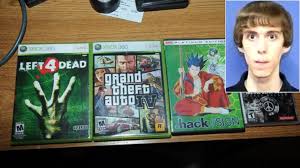 Anyone who was hoping for clues as to Lanza’s motivation, or an explanation that might clearly link his mental state to his murderous actions, will be left perplexed by the state attorney’s investigation. The report is unable to provide answers for many of our most pressing questions. Was Lanza insane? Was he on an angry vendetta? Too many video games? Why did this happen? How could we have prevented it? How can we prevent it from happening again in the future? The report leaves us little to work with here: “The obvious question that remains is: ‘Why did the shooter murder 26 people, including 20 children?’ Unfortunately, that question may never be answered conclusively, despite the collection of extensive background information on the shooter through a multitude of interviews and other sources.”
We are left with the discomforting thought that when it comes to individuals such as Adam Lanza who are left isolated and untreated in their bedrooms, we may never have adequate social mechanisms in place to ensure their safety, or the safety of their neighbors. Even if we did have vastly improved mental health services, and more stringent gun control laws, would this really have stopped Adam Lanza, in his particular set of circumstances? Would he have still slipped through the cracks? We cannot be sure. Uncertainty, however, need not deter us from pushing ahead with urgently needed reforms. Here we should aim for progress, not perfection. If we can do anything at all that might prevent future Newtown tragedies, we need to do so. And we should be willing to explore all options, in order to get people such as Adam Lanza the help they need. Too many individuals are slipping through the cracks right now. Surely we can reach some of them, before they spiral downward to a violent death.
Gun Violence and Children
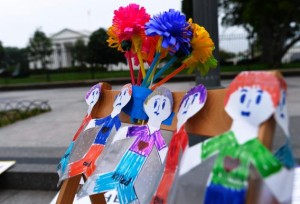 Sandy Hook was a tipping point, when even the most uninformed Americans were forced to admit that the country has a full-blown crisis on its hands. Gun violence could no longer be shooed away as “other people’s problems.” One year after the tragedy in Newtown, as the candles of remembrance are being lit, we need to remind ourselves that denial is still not an option. Neither is apathy. Just because it is difficult to get the U.S. Congress to enact sensible gun legislation, and just because it is hard to convince state assemblies that our mental health services are woefully under-funded and therefore inadequate — this is no reason to stop fighting for what’s right for our kids and our communities.
Let’s be clear on this: gun deaths did not cease following the funerals and vigils in Newtown in 2012. In fact, the carnage nationwide continued on unabated. A special report just released by Mother Jones states that since the Newtown tragedy, at least 194 children under the age of 12 have been killed by guns in America. Of those, 127 died from gun shots in their own homes, 72 pulled the trigger themselves or were shot by another child, and 52 died while handling a gun that was left unsecured.
 These figures are most likely incomplete, however. It is difficult to obtain comprehensive statistics, due to reporting irregularities from state to state. A recent study of pediatric records by a group of Boston Physicians found that actual numbers of fatal child shootings in the U.S. are probably much higher. Their research found that approximately 500 children and teens are killed each year by guns, while another 7500 are hospitalized for gun shot wounds. Add this to the many thousands of adults who are killed and wounded each year (over 100,000), and you don’t need to be a statistician to understand the severity of the problem.
We must stress that most children who are wounded or killed by guns are not the victims of “crazed psycho-killers” or isolated, unstable, and untreated persons such as Adam Lanza. Most people suffering from mental illness are not dangerous at all. The reality of gun violence for American kids involves simple accidents and careless behavior in their own homes. These incidents serve as painful reminders that having a firearm in the house does not make anyone “safer.”
 No doubt mental health services need to be improved. But let’s not become fixated on insane shooters as the main problem when it comes to gun violence in America. The root cause of our problems with gun violence is simple: We have too many guns in our society. Based on consolidated information from the U.S. Bureau of Alcohol, Tobacco, Firearms and Explosives, there are about 300 millions guns in the U.S. There are nearly as many guns as there are people. To expect to raise children in a safe environment when there are this many firearms out there is, quite frankly, insane. Thus, in addition to sensible gun legislation, we need to change how we as a society think and talk about guns. We need consciousness-raising when it comes to the issue of guns. We have to dismantle and move beyond the ridiculous “gun culture” mentality afflicting our nation. This will be a long and arduous process. We have much work to do. Change may be slow in coming. We may need future generations to finish a job that we can only start. But it’s worth it. And Newtown helps us to never forget that.
If you enjoyed this article, please consider sharing it!



I am really touched by this magnificent article! Informative and compassionate but not sensationalized.
The ridiculous ‘gun culture’ is causing so much pain.
Many of the parents have been asking for stricter and more sensitive gun laws. It is more important to them than any shrine to their loved ones.
Adam Lanza’s poor mother was misguided enough to ‘bond’ with her son by going to the shooting range with him.
Hard to start a conversation about guns when the head of the dragon is in the greed clouds.