

Kampot Ex-Pat Murder Suspect Olivier Van Den Bogaert Released on Bond
In a rare move a Cambodia appeal court has released Olivier Van Den Bogaert, main suspect in the brutal murder of a young French tourist in February 2013, on bail after almost a year in detention. Under Cambodian law Van Den Bogaert could have been held for another six months before going to trial. The prosecuting judge has 15 days to appeal the decision.
The naked body of 25-year old Ophelia Begnis was pulled from the Kampot River on 10 February last year. Her face had been devastated with a heavy sharp instrument like a machete or chopper. She had left the guesthouse she was staying in, Les Manguiers, the previous afternoon on a rented bicycle and was not seen alive again. She was reported missing the next morning when she was due to leave Kampot by bus but did not appear.
 Kampot is a quiet, pretty, historic town popular with backpackers and known for its famous pepper and resounding natural beauty. Violent crime against tourists is almost unheard of; the murder of Ms Begnis had an enormous impact on the local community.
 From the start of the investigation police focused on the foreign community. Belgian guesthouse owner, Van Den Bogaert, 41, was arrested on 26 April, 10 weeks after Ms. Begnis’ death based on an eyewitness who allegedly saw him dumping a bicycle in the river. A bicycle was recovered but could not be positively identified as the one ridden by Ms. Begnis.
A French forensics team visited the town in March 2013 and gathered evidence from boats used for tourist trips and took DNA samples from a number of foreign residents. Cambodia does not have a criminal forensics laboratory capable of DNA assays so samples were sent to one of six laboratories in France.
 The French examination showed that Ms. Begnis had not been raped and there was no evidence linking her to Van Den Bogaert.
Local press quote Seng Sivutha, deputy director of the Appeal Cour:
“We did not have sufficient evidence to inculpate him, so Appeal Court Judge Meng Khun Leang ordered his release.”
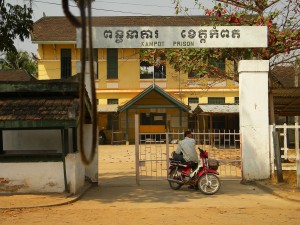 Although Van Den Bogaert is said to have been treated well, with friends sending food and a mattress, and despite being housed separately from Cambodian prisoners, his life for the last year has been intensely difficult in the country’s second most overcrowded prison.
A member of Van Den Bogaert’s family tells All Things Crime Blog “(His release) is a relief. His health and mental state is at the moment the biggest worry”.
Unless the prosecuting judge drops the charges in the face of the appeal court decision it may be many more months before a trial takes place.
Click here for more on the Kampot murder case.
If you enjoyed this article, please consider sharing it!








Bob – Thanks for the update on this case. It sounds like Van Den Bogaert is not free to leave Cambodia, since he is still set to be tried. Since the DNA evidence failed to inculpate him, how do you suppose the prosecution will be able to convict him? Is it going to rely on the testimony of one witness, who claimed that he/she saw Van Den Bogaert throw a bicycle into the river? That testimony, standing alone, would be a very thin reed on which to underpin a murder prosecution. Because the appeals court, in releasing Van Den Bogaert on bail, stated that it “did not have sufficient evidence to inculpate” him, that would seem to put great pressure on the prosecution to dismiss the murder charge against Van Den Bogaert. Do you agree?
Certainly new ground has been broken. I’ve spoken to people very familiar with the legal system in Cambodia and they tell me that it is almost unheard of for bail to be granted in a felony case of this nature.
Under the Cambodian system it is up to the investigating judge to determine whether or not there is sufficient evidence to go for trial, similar to the French system. In Cambodia the police give evidence to a prosecuting judge who gives it to the investigating judge. The prosecuting judge does not investigate, nor, I think, decide on the strengh of the evidence – that is the job of the investigating judge.
However, the prosecuting judge does have two weeks to lodge an objection to the granting of bail and it may be that further evidence becomes available should he lodge an objection, although personally I feel that will not happen.
It is hard to assess what the impact of this will have on the trial – if there is one – or, indeed, jurisprudence in Cambodia, if any.
Cambodia is still struggling to rebuild and professionalise its legal and law enforcement capacity.