
To Burn or Not to Burn? Auto-Da-Fé Is Not Good for Women or Children!
by Darcia Helle
Burning at the stake was a form of execution practiced at least as far back as Babylonia and ancient Israel. Treason, heresy, and witchcraft were among the crimes for which this choice of capital punishment was most often used.
Death by fire was a slow and excruciating execution. Occasionally, if a large fire was built, the victim would succumb to asphyxiation before the flames touched his or her skin. Most often suffering was part of the plan; therefore the fire was deliberately made small. In this situation, death could take up to an hour and would usually result from loss of blood or heatstroke.
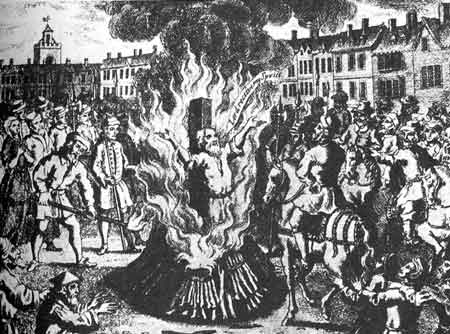 Various methods are known to have been used for burning people at the stake. In one, the stake would be driven into the ground and the prisoner would be fastened with chains or iron hoops. The stake would then be surrounded by a low pile of burning wood. The second method, popular with witch burnings, was to hang the prisoner from the stake and pile the wood high enough so that observers could not see his or her face as it burned. Another method was to tie the prisoner to a ladder that was suspended on a frame over the fire.
The Japanese practiced a brutal variation of burning at the stake. The prisoner was hung upside down by his/her feet, with his/her head inside a pit. A platform enclosed the prisoner’s neck and the fire would be built on top of that platform. This method kept the head from the smoke and fire, prolonging the agony and postponing death for as long as possible.
Burning was the capital punishment the Old Testament often recommended for crimes pertaining to sexual misconduct. A few of the Bible verses on this issue include:
Genesis: Tamar, thy daughter-in-law, hath played the harlot; and moreover, behold, she is with child by whoredom. And Judah said, Bring her forth, and let her be burned.
Leviticus: If the daughter of any priest… profane herself by playing the whore, she profaneth her father: she shall be burnt with fire.
Leviticus: If a man takes a wife and her mother, it is wickedness; they shall be burned with fire, both he and they; that they be no wickedness among you.
 Sadly, this barbaric method of punishment was used to some degree, all over the world, for more than a millennium after the Old Testament was written. Burning at the stake was used by Christians and non-Christians alike.
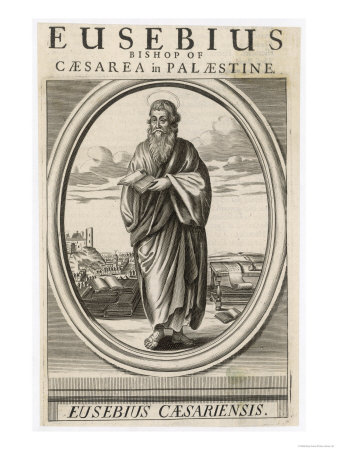
Eusebius of Caesarea
The fourth-century writer, Eusebius of Caesarea recorded the scene of a death sentence handed out by the emperor Maximian. Maximian was a zealous pagan with no tolerance for Christians. The victim was a man named Apphianus (also known as Amphianus), who had converted to Christianity. According to Eusebius, Apphianus’ feet were first wrapped in cotton that was soaked with oil, then set on fire. In his words:
The martyr was hung up at a great height, in order that, by this dreadful spectacle, he might strike terror into all those who were looking on, while at the same time they tore his sides and ribs with combs, till he became one mass of swelling all over, and the appearance of his countenance was completely changed. And, for a long time, his feet were burning in a sharp fire, so that the flesh of his feet, as it was consumed, dropped like melted wax, and the fire burst into his very bones like dry reeds.
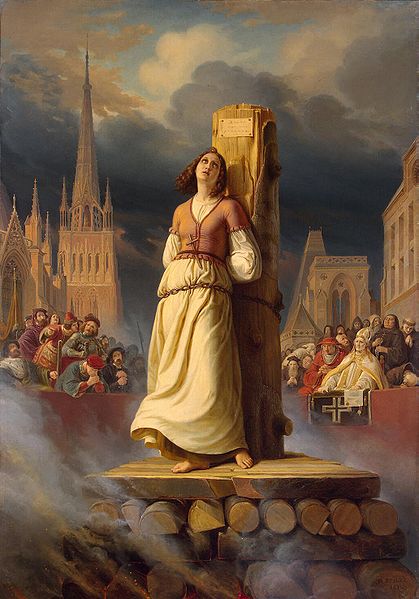
Joan of Arc
In 1307 France, a sect called the Templars was suppressed and many of their knights were burned at the stake. This action seemed to trigger an obsession with witchcraft throughout the country. By 1350, 1,000 people had been prosecuted for witchcraft and 600 of those had been sentenced to burn.
In 1401, Henry IV signed the Statute of Heresy, which gave the clergy the power to arrest anyone they believed to be guilty of heresy, which is any religious opinion contrary to the current, popular church dogma. Those who refused to recant were burned at the stake.
Perhaps one of the most infamous cases occurred in 1431, when Joan of Arc was charged with witchcraft and heresy and was publicly burned at the stake.
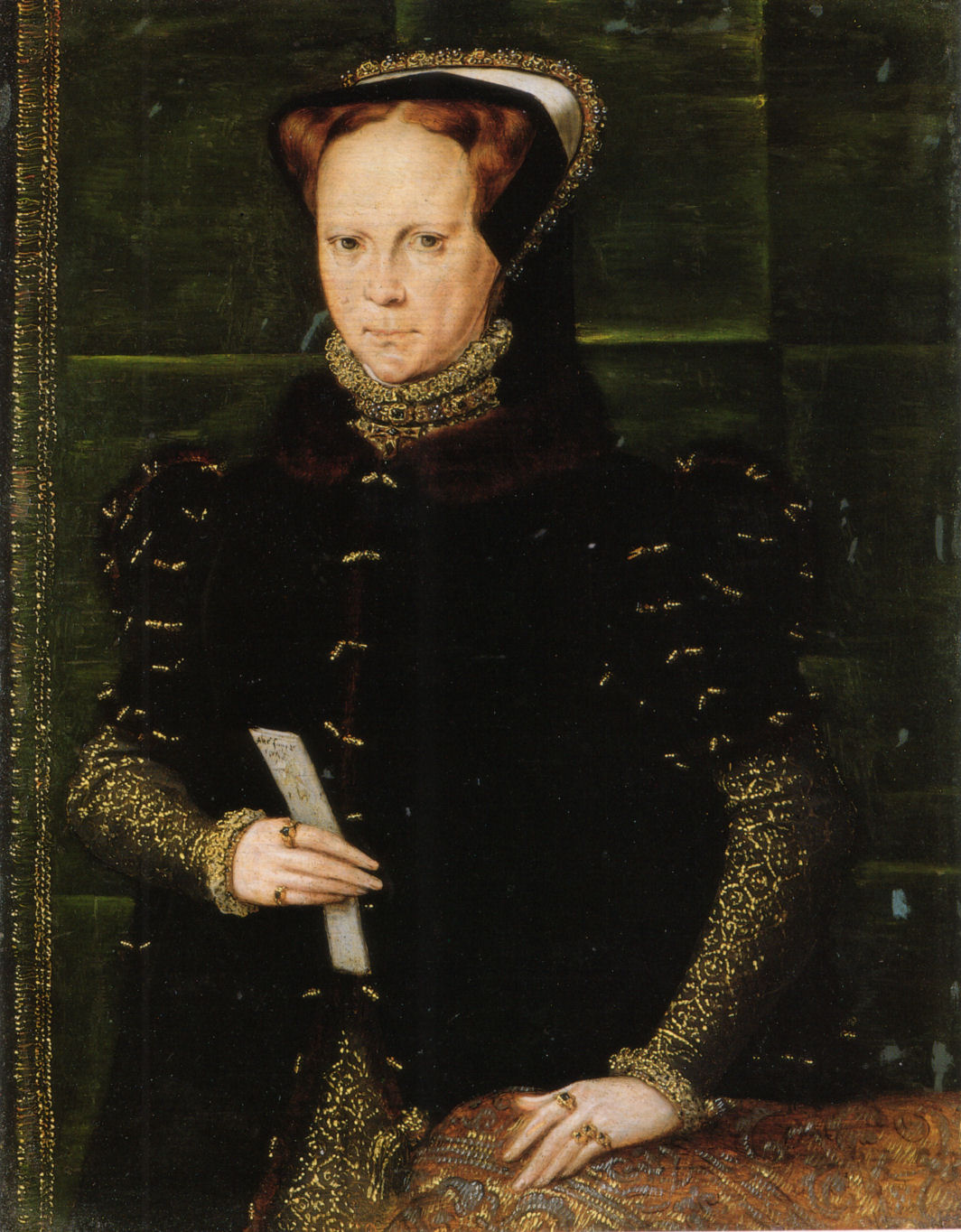
Bloody Mary
Henry VIII’s Catholic daughter, Mary I (Bloody Mary), ordered at least 274 Protestants burned for heresy. One of Mary’s many victims was Dr. John Hooper, Bishop of Gloucester, who, in 1555, was burned in front of 7,000 spectators. An eyewitness, Henry Moore, wrote about the event in his book The History of the Persecutions of the Church of Rome and Complete Protestant Martyrology. Some of what he had to say follows:
At length, by renewing of the fire, his strength was gone, and his hand fastened in the iron which was put round him. Soon after, the whole lower part of his body being consumed, he fell over the iron that bound him, into the fire, amidst horrible yells and acclamations of the bloody crew that surrounded him. This holy martyr was more than three quarters of an hour consuming…
Death by burning was a popular method of execution during the Spanish Inquisition. The first Inquisition, established by Pope Gregory IX in 1231, primarily took place in northern Italy and southern France. The second, more well-known Spanish Inquisition was sanctioned by Pope Sixtus IV in 1478 at the request of King Ferdinand of Aragon and Queen Isabella of Castile. By some estimates, the number of victims burned during the second Spanish Inquisition ran into the hundreds of thousands. The majority of victims seemed to have been women. Children were also frequently burned along with their parents when found to be heretics.
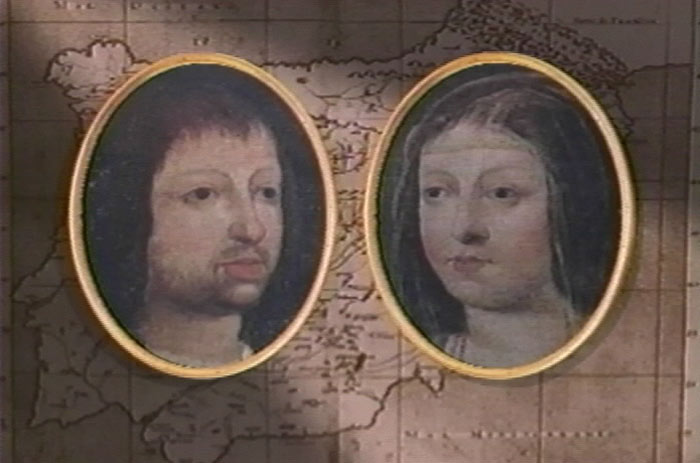
King Ferdinand and Queen Isabella
King Ferdinand and Queen Isabella appointed the Dominican Tomas de Torquemada as their Inquisitor-General. During his fifteen-year career as head of the Inquisition, Tomas de Torquemada was personally responsible for burning more than 2,000 people at the stake. His targets were mainly non-Christians and recent converts.

Spanish Inquisition
One particularly gruesome ritual during the Spanish Inquisition was the Auto-da-Fe (Act of Faith). This ritual took place on Sundays, as well as other holy days, when large crowds were available to attend. Those considered heretics were secretly rounded up on the prior evening and brought to the inquisition panel. These supposed heretics were then tortured until they either confessed or died from their injuries.
On occasion, the panel would spare an individual who asked to be reconciled with the church. That person would then have to endure the penance of being whipped half-naked through the city streets on six successive Fridays. Heretics who either refused to reconcile or who had relapsed were sentenced to public burning.
The following is taken from a spectator’s rather disturbing and all too visual account of one burning during the Middle Ages:
You could see the white bones showing through as the skin and flesh of the man slowly dragged itself away from the skeleton and fell, in a pink and orange and red-raw curtain, down towards his feet, which were festooned with flames. Further in-depth description is followed by: Thousands of spectators watched these burnings and it could take three-quarters of an hour to die.
In 1629, Burgstadt Germany burned 77 of its 3,000 citizens for witchcraft.
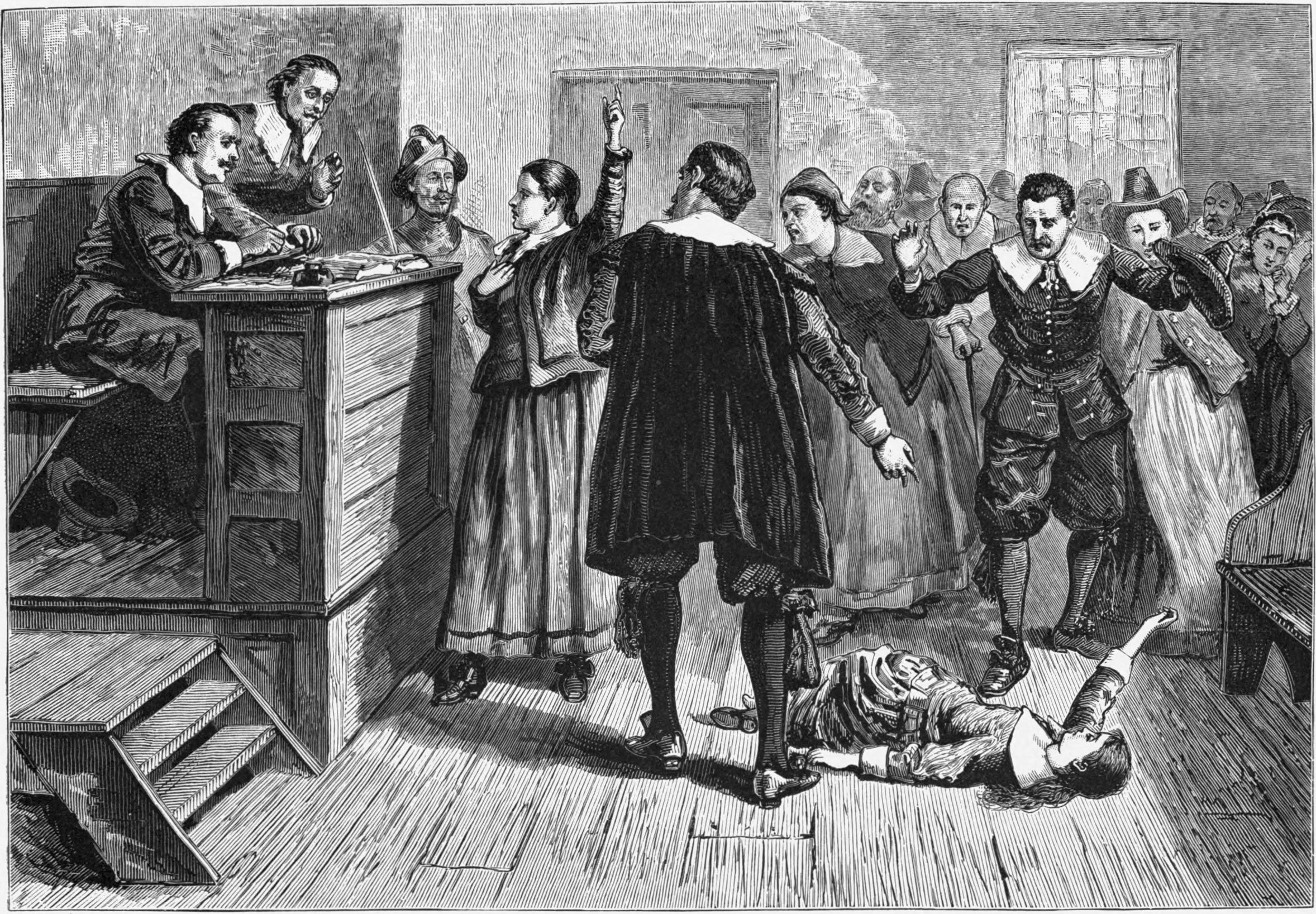
Salem Witch Trials
Colonial America also did its share of burning at the stake. In 1741, 29 black and 4 white people were sentenced to death for the crime of conspiring to burn down the city of New York. Of those 33 individuals, 22 were hanged and 11 were burned at the stake.
Unfortunately, burning is still used in some areas of the world. South Africa and Haiti at times execute prisoners using a method called necklacing. This is done by forcing a rubber tire, filled with gasoline, around the prisoner’s chest and arms. The tire is then set on fire, causing the rubber to melt into the victim’s flesh.
In the late 1990s, a number of North Korean army generals were executed by burning alive in Pyongyang, North Korea.
In 2006, in Sulaymaniyah, Iraq, at least 400 women were burned alive. And in the first half of 2007, in Kurdistan, Iraq, approximately 200 women suffered the same fate.
Please click to below to view Darcia’s Helle’s previous posts:
The Disgraceful Entrapment of Jesse Snodgrass: Keep the Narcs Out of Our Schools
Why Should I Believe You? The History of the Polygraph
“Don’t Behead Me, Dude!”: The Story of Beheading and the Invention of the Guillotine
Aileen Wuornos, America’s First High-Profile Female Serial Killer, Never Had a Chance
The Terror of ISO: A Descent into Madness
Al Capone Could Not Bribe the Rock: Alcatraz, Fortress of Doom
Cyberspace, Darknet, Murder-for-Hire and the Invisible Black Machine
 Darcia Helle lives in a fictional world with a husband who is sometimes real. Their house is ruled by spoiled dogs and cats and the occasional dust bunny.
Suspense, random blood splatter and mismatched socks consume Darcia’s days. She writes because the characters trespassing through her mind leave her no alternative. Only then are the voices free to haunt someone else’s mind.
Join Darcia in her fictional world: www.QuietFuryBooks.com
The characters await you.
If you enjoyed this article, please consider sharing it!







Amazing what it has taken for us to become so civilized. Thankfully I have no friends, so there will be no large crowd and the King may decide I’d make a boring show.
It’s a great thing to have no friends! 🙂 Except, then when you mount the Auto-Da-Fe, there will be no one there to beat their breasts and mourn for you.
Thank you for that laugh, Peter. 🙂
Great article but so full of imagery and realism that I feel the heat all the way here.
That explains why our friend Guillotin rose to lobby for equality in capital punishment. He really believed that it was unfair for common criminals in France to be executed by tortuous methods such as hanging, burning at the stake and breaking on the wheel while aristocratic felons had the privilege of quick decapitations, particularly if they tipped their executioners to ensure swift sword chops.
Wow we have come a long way. Even if at times, I think that some miss the good old days of burning at the stake. I would have hated to be left handed or poor.
I will be looking forward to your next article on the Roman games when Christians were eaten by lions…
It would be great to have a post on Spartacus, the Roman games and Crucifixion. Those were strange dark times in antiquity.
Patrick, I like that idea. I’m on it. 🙂
Cool! I’ve always been fascinated by that story! 🙂
The insight from people who’d actually witnessed a burning made me queasy. I’d found some commentary too graphic to share. Often these ‘events’ were mandatory, so all the townspeople were expected to attend.
I wonder what all this did to the psyches of the spectators? Watching this sort of thing could make a person snap psychologically. (I’d probably be one of those crazy people.) I imagine it also helped created some psychopaths.
That’s a good question. I cannot imagine watching such a spectacle and not suffering emotional harm.
I read somewhere that pickpockets were very active during executions because the watchers were mesmerized or maybe in shock over what was going on. And the irony is that they executed pickpockets.
I remember reading that, as well. The ‘events’ were havens for criminals, and there is a bizarre irony in that.
I sometime think, that as a species, we are insane, with occasional individuals being more insane than the rest (Who but insane people would advocate/put up with burning people alive?) Fortunately, there are also occasional individuals who’re more SANE than the rest, and it sort of evens out, keeping us from going totally off our rockers and perhaps destroying ourselves completely before we can evolve further. (Okay, okay…I write science fiction and fantasy, but I could be right, right? Uh-oh…I mentioned evolution…!)
Hi Bea,
Nice to hear from you after all our tweeting back and forth.
I’m not sure that our species as a whole is insane, but I like your notion that what is typically passed off as the bad side of human nature is actually a form of insanity (e.g.: auto-da-fe). This degree of destructiveness makes no sense and cab easily be seen as a form of insanity.
I also like your notion that some of us are more sane than the rest of us and that these folks help us hold it together. Certainly, the human race has to evolve if our species is going to survive. Unfortunately, the US currently seems to be in many ways anti-progress and anti-positive-evolution. This is a big problem because the US is still very strong and influential.
To put it in a nutshell, I’m all in favor of positive evolution and could certainly use some of it myself.
Sanity as an arbitrary state of being… You might be onto something there, Bea.
The problem becomes how to stay reasonably sane in a world filled with insanity. Maybe this is why Prozac is so popular?
[…] To Burn or Not to Burn? Auto-Da-Fé Is Not Good for Women or Children! […]
[…] To Burn or Not to Burn? Auto-Da-Fé Is Not Good for Women or Children! […]
[…] To Burn or Not to Burn? Auto-Da-Fé Is Not Good for Women or Children! […]
[…] To Burn or Not to Burn? Auto-Da-Fé Is Not Good for Women or Children! […]
[…] To Burn or Not to Burn? Auto-Da-Fé Is Not Good for Women or Children! […]
[…] To Burn or Not to Burn? Auto-Da-Fé Is Not Good for Women or Children! […]
[…] To Burn or Not to Burn? Auto-Da-Fé Is Not Good for Women or Children! […]
[…] To Burn or Not to Burn? Auto-Da-Fé Is Not Good for Women or Children! […]
[…] To Burn or Not to Burn? Auto-Da-Fé Is Not Good for Women or Children! […]
[…] To Burn or Not to Burn? Auto-Da-Fé Is Not Good for Women or Children! […]
[…] To Burn or Not to Burn? Auto-Da-Fé Is Not Good for Women or Children! […]
[…] To Burn or Not to Burn? Auto-Da-Fé Is Not Good for Women or Children! […]
[…] To Burn or Not to Burn? Auto-Da-Fé Is Not Good for Women or Children! […]