

William Lobban’s “The Glasgow Curse” Journeys to the Heart of the Scottish Underworld
book review by Patrick H. Moore
William “Gibby” Lobban was born into one of Glasgow’s most notorious crime families and was infected with “the Glasgow Curse” even before birth. His mother Sylvia Manson was the sister of notorious gangster Billy Manson. As a result of his unusual pedigree, Mr. Lobban was destined from birth to take his place within the shifting ranks of Scottish gangland. In his engaging “no-holds-barred” autobiography, The Glasgow Curse, Mr. Lobban tells the story of his life within the Scottish crime milieu with wit, skill and unflinching honesty. He writes in the Introduction:
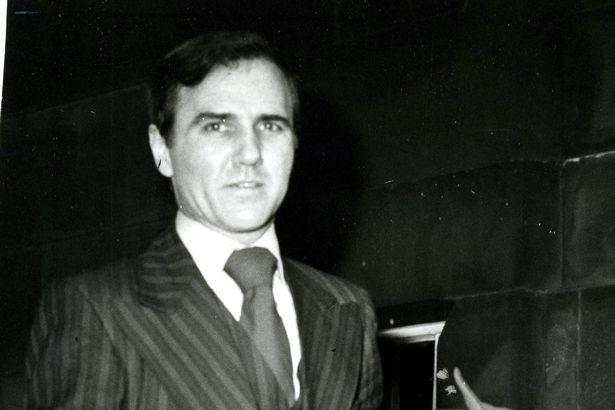
Billy Manson
Back in the day my uncle, Billy Manson, was a criminal boss who controlled a tight ship and along with his loyal friend and partner in crime, Scotland’s most notorious gangster Arthur Thompson, had an iron grip on an underworld dominated by fear, armed robbery and protection rackets. Vincent and Robert Manson, my other uncles, were equally hardcore villains with a proclivity for law-breaking and violence. It was their way of life and nothing could change that.
In keeping with his pedigree, William Lobban had the misfortune to be born in prison where his mother was serving a two-year term for serving as a lookout while her brothers attempted to “liberate” valuable antiques and the contents of a safe from as English country mansion.
Sylvia had her share of problems – good looks, heavy drinking and schizophrenic tendencies combined in a volatile mix was a sure-fire recipe for trouble and Sylvia had her share of it. Perhaps her most dramatic fall from grace was the time she stabbed her boyfriend in the stomach, nearly killing him, while in a nasty mood with William looking on. Remarkably, Sylvia managed to talk her way out of it.
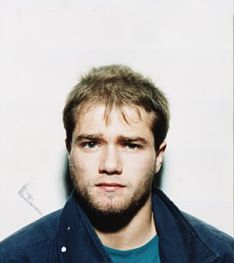
A youthful William Lobban
William was raised mostly by his grandparents who were a decent lot but were also prone to heavy drinking. This meant no supervision much of the time and William learned all the tricks of wayward youth from time immemorial.
William’s inevitable journey into gangland took a big step forward when his uncle Robert Manson was released from prison:
Robert was in his early 30s when he came out of jail, and he went to live at my mother’s in Possilpark. I remember taking to him straightaway. He had a magnetic personality and he would become a father figure to me. He was about 5 feet 8 or so and had a full head of jet-black, shoulder length hair, which he kept looking sharp at all times. He had the typical Glasgow hard man facial features: a strong chiseled expression along with a fearsome presence. Always immaculately turned out, he looked very dapper in the sharp suits and dress clothes he wore. He didn’t have a problem wearing a pair of red suede shoes; he was very flamboyant and could carry it off.
Robert was also incurably violent. He loved cats and once shocked the neighborhood by repeatedly stabbing a stray dog who had the bad sense to maul a cat.

East End of Glasgow
Because no one had the strength or inclination to properly care for William, he inevitably became a sort of Scottish version of a ward of the state. Although smart, he could barely read. Outgoing by nature, he turned his energies toward traditional crime targets – knocking off liquor stores, businesses, and armored cars when he got older.
The fact his uncle Robert Manson was murdered under mysterious circumstances in 1983 was a harsh blow which hardened William further:
No one got a chance to say a proper farewell to Robert. The coffin lid remained screwed down tight so that no one could see the brutal damage caused to his face by the 12-bore shotgun blast. My mother insisted that I be a pallbearer at the funeral, despite the fact I had just turned 15. I recall looking around me as I carried the coffin, taking everything in, listening to my mother howl with emotion clouded by alcohol, and still I never once shed a tear for the person I had looked up to and respected since the age of 10. It’s not that I didn’t want to cry, I simply couldn’t.

HMP Maximum Security Shotts
When William was 20, he was arrested for taking part in the armed robbery of a rent office with Michael Healy, a notorious and calculating armed robber. William was sentenced to six years and was sent to HMP Maximum Security Shotts. Much like California state prisons, the inmates called the shots to a large degree:
In 1988, Shotts was definitely a prisoner’s prison. It was easy to smuggle almost anything in when visitors came. The guards just let you get on with it; there was no discipline whatsoever. I remember seeing prisoners walking back to the hall with guitars, banjos and other instruments they had picked up at a visit, and these items went totally unchecked.
In Shotts, William meets Paul Ferris, another notorious Scottish “hard man” with whom he was to have problems later on. Despite being too young to even be in Shotts (he was actually only 20), William’s street smarts and highly-honed survival instincts were such that he adjusted to Big House life with relative ease.

Perth Prison
After taking part in his first prison riot, William’s real age is revealed and he gets transferred to a youth offender’s facility and then, upon turning 21, is transferred to Perth Prison, “a proper man’s jail” with plenty of football teams and excellent athletic facilities. William keeps a clean nose at Perth and earns Category C status and is transferred to Dungaval semi-open jail, which to William, means one thing and one thing only: Escape.
William escapes on a day pass in early 1991 and goes underground. Having earned a reputation as a right proper “hard man”, William then engages in various criminal altercations, many of which involved bitter fighting between rival gangsters. Loyal to a fault, William invariably stands up for his “mates” which lands him in increasingly dicey situations.
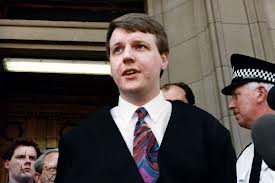
A youthful Paul Ferris
Several escapades later, William meets up with the notorious gangster Paul Ferris and they go to a high-end nightclub for a night on the town. William, who has never been much of a drug user, ends up taking amphetamine and LSD, all the while packing heat. He then undergoes what must be one of the stranger bonding experiences in the history of hallucinogens with Paul Ferris:
I asked Ferris to come with me to the Gents toilet as I wanted a quiet word. The two of us zigzagged our way through the packed nightclub toward the restroom. I selected an empty cubicle and gestured Ferris to come in with me. Once inside I locked the door. There was barely enough room for one person, never mind the two of us. I unzipped my trousers, they slid to my knees, and I freed the Beretta from where I had taped it to my leg.
‘Listen Paul, I carry this gun because some friends of mine have got ongoing trouble with the McGoverns in Springburn. It’s just in case I run into any of them.’
He took hold of the handgun, released the magazine to check it had bullets, put it back, and then returned the hammer to the normal position.
‘Don’t do that with the hammer, Gibby. You’ll end up having a nasty accident with it taped to your leg like that.’ To be honest I was more worried about it jamming if I had to use it in a hurry.
Ferris paused for a moment and said: ‘Gibby … can I accept you as a brother?’
Surprised by what he just said, I looked at him: ‘Of course you can.’
We shared an emotional hug and in that moment we bonded.
 This peculiar scene is emblematic of the way things are changing in the Scottish underworld: Two of the toughest gangsters in all of Scotland bond over gun safety while peaking on LSD in the men’s toilet in one of Glasgow’s most high-end nightclubs.
And not all of the changes are for the better. Traditionally, although Scottish gangsters were perennially feuding with one another, the battles were strictly between men. Women and children were strictly off limits and if a hard man had a beef with another hard man, they settled it themselves mano-a-mano. But with the incursion of the drug trade, the old standards were breaking down rapidly and the ancient honor system was rapidly eroding.
Shortly thereafter, while checking in with his “big pal” Michael Healey to discuss a major heist they’re planning, William is shocked to discover that Healey believes that Paul Ferris is a “grass”, a police informer, or what here in the States we would call a “rat” or “snitch”. William naturally doesn’t want to believe this about Ferris whom he considers a close friend.
Although it may be counterintuitive to view a hard man like William as an idealist, his friendships are important to him, and from this point forward in his narrative, he gradually comes to realize that the people he looks up to and admires the most may ultimately prove to be unworthy of his friendship. The prime example of this is Paul Ferris himself – his LSD bonding buddy.
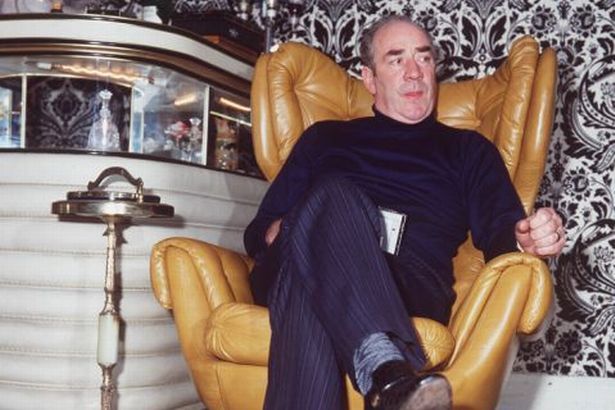
Arthur Thompson, Sr.
Ferris was formerly partners with Scottish crime boss Arthur Thompson, Sr. The two men have had a falling out, however, and Ferris arranges to whack Thompson’s son, Arthur, Jr. Although Ferris is charged with the murder, the prosecutors cannot prove their case and Ferris is ultimately acquitted.
Several other murders among the outlaws occur and as things deteriorate, William finds himself unsure who he can trust – an unease that proves somewhat prescient when Paul Ferris ultimately accuses him of whacking Arthur Thompson, Jr.
(Although William Lobban pulled off many a heist back in the day and admits to beating many a man most cruelly, he claims to have never killed anyone, although he was certainly tempted at times, particularly while serving time.)
During his 13 weeks of freedom after escaping from the Dungaval semi-open prison, William engages in numerous escapades, plots and intrigues. It’s only a matter of time, though, until as one of the most wanted men in the British Isles, his luck runs out and it’s back to prison for Gibby.
In total, William is sentenced to 12 years in prison for his various robberies and an additional 18 months for staging a prison riot. As a marked man with a heavy rep and a “I will back down from no man” attitude, these 12 plus years of confinement are characterized by endless turmoil including long stints in solitary and occasional participation in prison riots, scenes that are vastly entertaining and more than a little frightening.
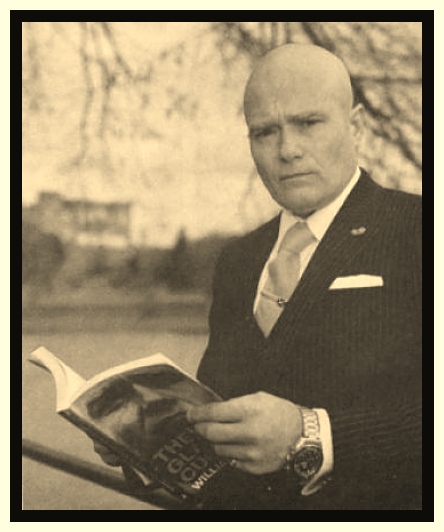 At one point, no prison in all of Scotland will accept William and he is shuttled off to England where he does time in various English penitentiaries.
During the long wearisome years of imprisonment, William slowly comes to the realization that escaping from Dungaval back in 1991 was a very foolish move. What’s done is done, however, and William stoically fights his way through more than a decade of wall-to-wall vicissitudes.
He is finally released from prison on 18 June 1998:
For crimes I’d committed purely for financial gain, I’d accepted my punishments, served out 80 per cent of my time the hard way, and I paid back my debt to society. You’d think that having spent so much time behind bars, not to mention the way I had behaved during much of my incarceration, that the prison authorities would have made a concerted effort to offer me some sort of viable rehabilitation to prepare me for life back outside in the community. This wasn’t the case. I received no form of help in reintegrating back into society. Instead , the guard in the reception at Hull jail handed me a giro checque for 70 (pounds) as I left to face a whole new world outside prison walls.
* * * * *
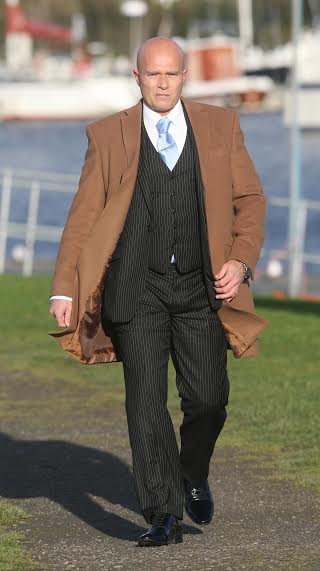
William Lobban today
It’s more than 15 years now since William Lobban was released from custody in 1998. It would be blatantly false to claim that he has broken no laws since then; in fact, he appears to have made a good living during some of this time engaging in the international drug trade.
He has cleaned up his act completely over the past few years, however, and is now a published author with a much-deserved best-seller on his hands. Although The Glasgow Curse is not a perfect literary work (it is perhaps a bit too episodic and lacks a true climax), it is, on balance, a captivating work that brilliantly brings its hard men and women to life as they battle to maintain their gangland traditions and remaining sense of human dignity in a rapidly changing world.
Lobban’s accomplishment is all the more impressive given that he is almost completely self-taught and self-educated and probably could not write a complete and proper sentence until he was in his late 20s. If I’m not mistaken, a sequel to The Glasgow Curse is in the works and I, for one, can’t wait to read it.
* * * * *
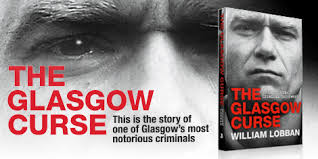 This chilling and disturbing memoir tells the story of one of Glasgow’s most notorious criminals.Writing in his own words, William Lobban tells how he was born in Exeter Prison to a violent, schizophrenic mother. His upbringing in the East End of Glasgow was just as bleak, and he ended up in care at an early age, destined for a life of violence and criminality. Aged only 15 he masterminded a daring break-in to a Glasgow pub, and many years of armed robberies, dealing narcotics and gang fights followed. When he wasn’t causing mayhem on the city streets, Lobban was serving terms in various high security prisons, where he was involved in some of the most serious prison riots and hostage taking of recent years.In the course of his criminal career Lobban teamed up with the infamous Paul Ferris, someone he believed was a trusted associate, someone who would later incriminate him as the murderer of fellow gangster Arthur Thompson Jr. Police also believed that Lobban was the man behind the brutal double killing of Bobby Glover And Joe ‘Bananas’ Hanlon, but none of these charges was made to stick.Finally released from prison in 1998, Lobban decided to walk away from a life of crime, but personal tragedy led to a dependence on alcohol and drugs which nearly killed him. Only In recent years has he found a measure of peace and stability, and now lives quietly in the Scottish Highlands. He has decided finally to set the record straight, and in this searing expose of the Glasgow underworld he reveals the true facts behind those crimes which he really committed, and those of which he is falsely accused.Released from prison 14 years ago, he has turned his back on crime ever since. He now lives quietly in the Highlands of Scotland.

If you enjoyed this article, please consider sharing it!






Excellent review, Patrick. Sounds like a must for my library.
This book is a fascinating read. It’s interesting to contrast the way it depicts Scottish crime with what goes on in the States.
Thanks for the review Patrick. Makes me want to read it!
It’s a very interesting story and well worth reading.
James, your comments are vague. If you don’t care for the book, fine. But you claim the book is inaccurate or dishonest. Please cite specific instances so we know what you are talking about.
Great review. I too have bonded with people in nightclub restrooms while on LSD. No guns were involved, though. Lobban’s story sounds incredible. The robberies, the prison riots. Good that he’s made it through the madness and emerged intact, ready and willing to write about it all. Bravo.