
The Gravest Injustice: The Case of Weldon Angelos, Piling on the Prison Time and Throwing Away the Key
by BJW Nashe
The case of Weldon Angelos is frequently cited as an example of the injustice that has plagued our criminal justice system both as a result of mandatory minimum sentencing requirements and the disastrous War on Drugs. Mr. Angelos is now back in the headlines, as a growing number of citizens are calling on President Obama to commute his prison sentence.
 Mr. Angelos, the son of a Greek immigrant, was a hip hop music entrepreneur from Salt Lake City who founded a record label called Extravagant Records. He was achieving success in the competitive world of rap, and had gained entry into Snoop Dogg’s coterie of artists and producers. Mr. Angelos was determined, and he had three young children to take care of. Nine years ago, at the age of 24, he ran afoul of the law when he repeatedly sold marijuana — a few half-pound bags for $350 apiece — to an informant who was working for the police in order to avoid his own drugs and weapons charges. The first time Mr. Angelos sold to the informant he was carrying a pistol in the center console of his car. During a second sale he had a pistol in an ankle holster. When the police searched his apartment more than a year later, they found three handguns.
 Mr. Angelos was never accused of hurting or threatening anyone, and he had no criminal record. But when he turned down a plea bargain that would have locked him up for 15 years, federal prosecutors in Salt Lake City were irked with him. In fact, they were so miffed that they decided to pile on three counts under the federal statute that penalizes drug dealers for carrying weapons. One count would have earned Mr. Angelos five extra years in prison. Three of them brought the grand total up to 55 years. All told, Angelos faced the possibility of more than 60 years behind bars once the jury convicted him.
 U.S. District Judge Paul Cassell, a conservative George W. Bush appointee who presided over Mr. Angelos’s case, wrote in November 2004, “The court believes that to sentence Mr. Angelos to prison for the rest of his life is unjust, cruel, and even irrational.” Yet he added, “The court reluctantly concludes that it has no choice.” Judge Cassell’s hands were tied by the mandatory minimum sentences prescribed by Congress for people who engage in drug trafficking while possessing a firearm: five years for the first offense and 25 years for each subsequent offense. In Mr. Angelos’s case, the judge was forced to grit his teeth and hand down the required sentence.
On appeal, the U.S. Court of Appeals for the Tenth Circuit upheld Mr. Angelos’s sentence. The U.S. Supreme Court declined to hear the case. In April 2009, a federal judge denied a request by Mr Angelos for a new trial by rejecting a claim that his trial attorney mishandled plea negotiations with the federal prosecutor. U.S. District Judge Tena Campbell ruled that the trial attorney had provided Mr. Angelos with “competent and thorough” legal help. Since this is likely to be one of the last appeals Mr. Angelos can file, his sentence increasingly looks set in stone.
Mr. Angelos has a projected release date of November 18, 2051. It should be noted that there is no parole in the federal prison system.
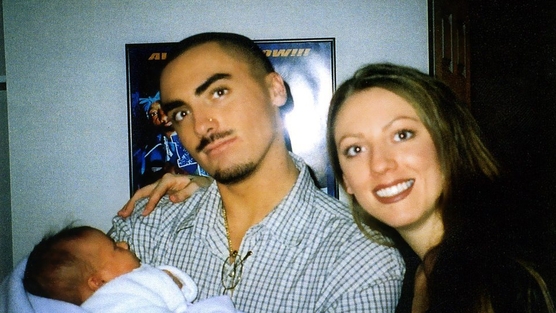 At the federal penitentiary at Lompoc, California, Mr. Angelos has worked in the prison’s dental lab and taken college classes in religion, philosophy, and politics — anything to take his mind off the nightmarish length of his incarceration. Intermittent visits with his two sons and his daughter are painful reminders of the life he has been forced to leave behind, all for selling a few bags of pot. And he doesn’t know if he’ll ever set foot outside the penitentiary grounds again.
A 55-plus year sentence for non-violent, low-level marijuana offenses strikes many who have reviewed the case as unjust and insane. On November 13, 2013, a letter was sent to President Obama signed by 113 concerned citizens — including 60 former prosecutors, 17 former judges, seven former state attorneys general, and four former governors. The letter, which was organized by the Constitution Project, urges the President to utilize his executive authority and commute Mr. Angelos’s sentence, which would be consistent with the President’s and Attorney General Holder’s principled opposition to harsh sentences for non-violent drug offenders.
Among other things, the letter highlights the absurdity of Mr. Angelos’s sentence when compared to other far more serious criminal cases:
 “Had Mr. Angelos been charged in [a Utah] court…he would have been paroled years ago. Indeed, Mr. Angelos’s sentence is longer than the punishment imposed on far more serious federal offenses and offenders. His term of imprisonment exceeds the federal sentence for, among others, an aircraft hijacker, a second-degree murderer, a kidnapper, and a child rapist. Incredibly, Mr. Angelos’s sentence is longer than those imposed for three aircraft hijackings, three second-degree murders, three kidnappings, or three rapes. In fact, the 55-year sentence for possessing a firearm three times in connection with minor marijuana offenses is more than twice the federal sentence for a kingpin of a major drug trafficking ring in which a death results, and more than four times the sentence for a marijuana dealer who shoots an innocent person during a drug transaction.”
 It is difficult to accept, but nevertheless true, that Mr. Angelos would have been treated less severely if he had shot the police informant posing as a customer instead of selling him marijuana more than once. The sentence was so egregious, the letter notes, that in 2006, “a group of 145 individuals—including former U.S. Attorneys General, retired U.S. Circuit Court Judges, retired U.S. District Court judges, a former Director of the FBI, former U.S. Attorneys, and other former high-ranking U.S. Justice Department officials—submitted a brief amici curiae in support of Mr. Angelos’s case.”
The letter goes on to argue that Mr. Angelos’s harsh sentence is precisely the sort of grossly disproportionate penalty that President Obama decried before he was elected president. For example, during a 2007 speech at Howard University, candidate Obama reminded the crowd that George W. Bush himself had at one point questioned long sentences for first-time drug offenders. “I agree with George W. Bush,” Obama said. “The difference is he hasn’t done anything about it. When I’m President, I will. We will review these sentences to see where we can be smarter on crime and reduce the blind and counterproductive warehousing of nonviolent offenders.”
 Many of us who have supported President Obama during both of his successful campaigns and throughout the first five years of his presidency nonetheless think he has been too slow to act when it comes to reversing the nation’s unjust policies regarding prosecution of drug offenders. Certain worthwhile steps have been taken. We applaud the President for signing the Fair Sentencing Act of 2010, which reduced the irrational sentencing disparity between powder cocaine and crack cocaine. We note that last August, after four and half years in office, Attorney General Holder finally unveiled a new policy whereby federal prosecutors are directed to exclude drug weights when bringing charges against certain low-level, nonviolent offenders, in order to avoid triggering mandatory minimum sentences. This new direction, assuming that U.S. attorneys comply with it, has the potential to shorten the prison terms of approximately 2 percent of the 25,000 federal drug offenders sentenced each year.
Bold, decisive action is still required, however, in order to undo the damage caused by three decades of the War on Drugs and its related “tough on crime” policies. Commuting the sentences of men such as Weldon Angelos, who have been unfairly and irrationally victimized by the system, is one clear and simple way President Obama can deliver on his campaign promises. Please visit the Change.org web site in order to review and sign a petition urging the President to free Mr. Angelos, who has already served ten years in prison, and who has a family waiting for him to come home.
If you enjoyed this article, please consider sharing it!